
Department Reminds Troops of Member-designated Benefits. Department Reminds Troops of Member-designated Benefits American Forces Press Service WASHINGTON, Oct. 28, 2011 – In their ongoing review of military benefits in connection with the repeal of “Don’t Ask, Don’t Tell,” Defense Department officials have now identified a total of 14 benefits where members may designate beneficiaries of their choosing, regardless of sexual orientation.
“We listed eight member-designated benefits in our original Quick Reference Guide, released Sept. 20. We’ve now validated an additional six,” said Defense Department spokeswoman Eileen Lainez. “While these are not ‘new,’ now that we’ve confirmed these additional benefits, we’re updating the Quick Reference Guide to ensure all are aware of their beneficiary options.” The 14 benefits identified for members to designate whomever they wish as beneficiaries are: -- Service Members Group Life Insurance beneficiary; -- Post Vietnam-era Veterans Assistance Program beneficiary; -- Death Gratuity beneficiary; Without Computer Security, Sources’ Secrets Aren’t Safe With Journalists.
The Body Politic: Do Graves of Dictators Really Become Shrines? On Tuesday, Libyan officials laid Muammar al-Qaddafi to rest in a secret, unmarked desert grave to prevent his burial place from becoming a shrine for his supporters or a target for his opponents.

The drainage pipes outside Sirte where Qaddafi was captured and the cold storage facility in Misrata where his corpse was temporarily stored, pictured above, have already become major attractions for Libyans. Back in May, U.S. officials cited concerns about creating a shrine as the reason why they committed Osama bin Laden's body to the sea. This fear of establishing shrines for reviled figures has a long history; the English ruler Oliver Cromwell, for example, was posthumously hanged in the 17th century and his head wasn't laid to rest until 1960. But the concern over Qaddafi's final resting place had us wondering: Do the burial places of controversial leaders really become shrines?
In short, yes. Philippe Desmazes/AFP/Getty Images Mahmud Saleh/AFP/Getty Images Martin Bernetti/AFP/Getty Images.
National Security Letter. FBI Gangs. Date set for military post office closures in Iraq. Stars and Stripes Published: October 27, 2011 BAMBERG, Germany — The U.S.
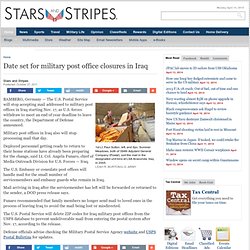
Postal Service will stop accepting mail addressed to military post offices in Iraq starting Nov. 17, as U.S. forces withdraw to meet an end of year deadline to leave the country, the Department of Defense announced. Military post offices in Iraq also will stop processing mail that day. Deployed personnel getting ready to return to their home stations have already been preparing for the change, said Lt. The U.S. Mail arriving in Iraq after the servicemember has left will be forwarded or returned to the sender, a DOD press release says. Funaro recommended that family members no longer send mail to loved ones in the process of leaving Iraq to avoid the mail being lost or misdirected.
The U.S. Defense officials advise checking the Military Postal Service Agency website and USPS Postal Bulletins for updates.