Voyage dans le futur : la mort de la Terre en images. Vue du mont Saint-Michel (L.
Bret pour Ciel & Espace). La fin du monde ne surviendra pas dans 4,5 milliards d’années, avec la mort du Soleil, mais bien plus tôt que cela ! Les plantes, puis les animaux devraient avoir disparu de la surface de la Terre dans moins d’un milliard d’années. 1168-1185. "Il y a des preuves que René Descartes a été assassiné" Il y a trois cent soixante ans, jour pour jour, dans la lointaine et glaciale Suède, s’éteignait René Descartes.
Officiellement, d’une pneumonie. Dans un livre non encore traduit, l’universitaire allemand Theodor Ebert (professeur de philosophie à l’université d’Erlangen, en Bavière) remet en cause la version officielle. Entretien. Le retour de Dieu ? - La vie des idées. Recensé : Richard Swinburne, Y a-t-il un Dieu ?
, traduction française de Paul Clavier, Paris, Ithaque, 2009, 136 p., 18 €. « The times, they are a changin’ » Les temps changent. Olympus Mons, un géant martien. En combinant les données de l'altimètre laser de la sonde Mars Global Surveyor (MOLA) et les images obtenues par les sondes Viking, les scientifiques ont reconstitué cette vue d'Olympus Mons.
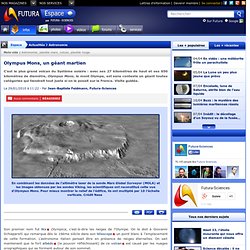
Pour mieux montrer le relief de l'édifice, ils ont multiplié par 10 l'échelle verticale. Crédit Nasa Olympus Mons, un géant martien - 3 Photos Son premier nom fut Nix Olympica, c'est-à-dire les neiges de l'Olympe. New human species found in Siberia. The remains of a little finger discovered in a cave in the mountains of southern Siberia belong to a previously unknown human ancestor, scientists said today.
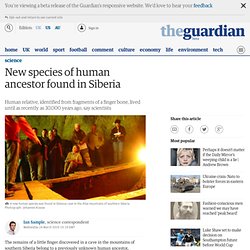
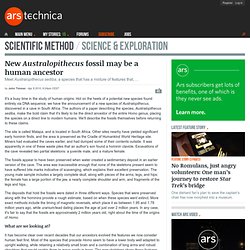
The finding suggests an undocumented human species lived alongside Neanderthals and early modern humans in parts of Asia as recently as 30,000 years ago. New Australopithecus fossil may be a human ancestor. It's a busy time in the study of human origins.
Universe’s age: 13.75 billion years. When a large nearby object, such as a galaxy, blocks a distant object, such as another galaxy, the light can detour around the blockage.

Le séisme du Chili a raccourci les jours. Le blog Sciences du Monde.fr révèle cette nouvelle étonnante: le séisme qui s'est déroulé au Chili le 27 février était d'une telle puissance qu'il a légèrement modifié la période de rotation de la Terre et donc la durée d'une journée.
«Après que la Terre a tremblé au Chili, dans la nuit de vendredi à samedi, les jours terrestres ont raccourci.» Le blog se rapporte aux estimations d'un chercheur d'un laboratoire de la Nasa et souligne que «le jour est désormais plus court de 1,26 microseconde». A Slate, on a eu une grosse frayeur: si on perd des microsecondes à chaque séisme, déjà qu'il n'y a que 24 heures dans une journée...
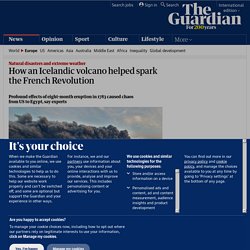
How an Icelandic volcano helped spark the French Revolution. Just over 200 years ago an Icelandic volcano erupted with catastrophic consequences for weather, agriculture and transport across the northern hemisphere – and helped trigger the French revolution.
Les grenouilles loufoques d'Equateur. Une équipe de scientifiques travaillant pour l'association de conservation et de recherche naturelle Reptile & Amphibian Ecology International ont découvert de véritables trésors de la biodiversité jusqu'ici inconnus dans un écosystème rare de la côte équatorienne.
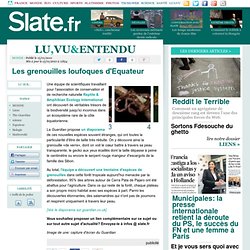
La Guardian propose un diaporama de ces nouvelles espèces souvent étranges, qui ont toutes la particularité d'être de taille très réduite. On y découvre ainsi la grenouille «de verre», dont on voit le cœur battre à travers sa peau transparente, le gecko aux yeux écaillés dont la taille dépasse à peine le centimètre ou encore le serpent rouge mangeur d'escargots de la famille des Sibon. Au total, l'équipe a découvert une trentaine d'espèces de grenouilles dans cette forêt tropicale aujourd'hui menacée par la déforestation. 95% des arbres autour de Cerra Pata de Pajaro ont été abattus pour l'agriculture.
Several species carry a torch for ancient farms. There is a long-standing debate over whether human influence on various natural landscapes can be beneficial, especially when it comes to agriculture. New findings show that the local ecosystem adapted to the construction of several large raised fields that were built hundreds of years ago in Amazonian climates. A distinctive set of "ecosystem engineers," including ants, termites, and woody plants, have preserved the man-made shapes today. Bats use the sun to orient flights through the dark. Dracula may not have been able to tolerate sunlight, but some nocturnal bat species may actually rely on the sun for navigation. National Parks in Kenya Not Insulated From Wildlife Declines.
Newswise — Long-term declines of elephants, giraffe, impala and other animals in Kenya are occurring at the same rates within the country's national parks as outside of these protected areas, according to a study released this week. "This is the first time we've taken a good look at a national park system in one country, relative to all of the wildlife populations across the whole country," said David Western, an adjunct professor of biology at UC San Diego and the founding executive director of the African Conservation Center in Nairobi, who headed the study published in the July 8 issue of the journal PLoS One.
"And we found that wildlife populations inside and outside of the parks are declining at much the same rate. " Climate Change Too Abstract For You? Dengue Fever Could Spread t. In red are counties that have one of the 2 Dengue mosquito vector species. Blue are are vulnerable areas. » Futurity.org, la voie du futur pour les universités? Aude van. Futurity.org , démarré en septembre 2009 par les universités américaines de Duke, Stanford et Rochester, offre la possibilité aux universités de recherche de ne plus être dépendant des médias pour faire connaître les résultats de leurs recherches. Début mars 2010, les 20 universités du “Russel Group” anglais, comprenant Cardiff, Leeds, Nottingham, Sheffield, Warwick, King’s College London et University College London, ont rejoint les 46 universités américaines faisant partie de ce réseau.
Le Russell Group les a rejoint car d’après Wendy Piatt, directrice générale du groupe, ils ont été impressionnés par la qualité des articles postés et par ce concept rafraichissant. Afin de faire circuler leurs articles, futurity.org utilise les réseaux sociaux tels que Facebook ou Twitter, mais aussi Google News. Brain is able to put fear in its place. A new international study finds that the brain has a far more sophisticated storage and recall capacity than previously thought, and is capable to holding and retrieving memories for specific fears, giving scientists greater understanding of how different fears are stored and holding promise for treating conditions like post-traumatic stress syndrome.
NYU (US)—The brain is capable of holding and retrieving memories for specific fears, revealing a more sophisticated storage and recall capacity than previously thought. The finding may have implications for treating post-traumatic stress syndrome as scientists gain greater understanding of how different fears are stored, they can move toward addressing specific fears for memories. Disease runs riot as species disappear - environment - 01 July 2. COULD biodiversity protect humans from disease? Conservationists have long suspected it might, and now they have the evidence to back this up.
Keeping complex ecosystems intact is thought to pay big dividends, by preserving natural balances among species that keep animal diseases in check. These includes zoonoses - animal diseases that affect humans . Rodents in the Americas carry hantaviruses, which can be lethal to people who inhale them from dried droppings. Le blobfish, le poisson le plus laid, est menacé d'extinction. Temps de lecture: 2 min Avec son apparence de visage humain déformé, le blobfish est une créature juste sortie de nos pires cauchemars. La Chine ne compte plus qu'une cinquantaine de tigres sauvages -
Éviter que l'année du tigre en Chine ne soit celle de sa disparition. C'est l'objectif de la Société pour la préservation de la vie sauvage, un groupe environnemental basé aux États-Unis, et dont la directrice du programme chinois a mis en garde lundi contre l'extinction du tigre dans le pays. Alors que le nouvel an chinois approche, Xie Yan a souligné lors d'une conférence de presse que les tigres étaient encore très présents il y a vingt ans. Mais selon des statistiques de l'an 2000, il resterait seulement une quinzaine de tigres du Bengale au Tibet, 10 tigres d'Indochine dans le sud-ouest du pays et une vingtaine de tigres de Sibérie dans le Nord-est.
Le tigre du Sud de la Chine pourrait déjà avoir disparu. Pourquoi l'éléphant est protégé mais pas le thon rouge. La conférence sur le commerce des espèces menacées s’est achevée cette semaine. Les requins devront se protéger seuls. Les rats démineurs du Mozambique. "Nous ne faisons pas de nos rats des kamikazes. Ils sont très précieux pour nous" Sommes-nous plus cons que les oiseaux ? Santé: avoir un gros QI protège le cœur. Les statistiques médicales sont parfois aussi surprenantes que cruelles. Ainsi en est-il de cette peu banale publication signée de spécialistes britanniques de santé publique; une publication qui vient bouleverser quelques idées généralement très répandues concernant les facteurs de risque et les populations les plus exposées au risque de mourir d'un l'infarctus du myocarde ou d'une autre maladies cardiovasculaire.
Ce travail signé d'un groupe du Medical Research Council britannique dirigé par David Batty vient d'être publié dans l'European Journal of Cardiovascular Prevention and Rehabilitation. Il établit que plus que le niveau des revenus, plus que l'hypertension artérielle ou que l'absence d'exercice physique c'est le faible niveau du quotient intellectuel (QI) qui constitue le facteur de risque le plus important de mourir prématurément d'une maladie cardiaque.
Seule la consommation régulière de tabac dépasse le risque associé à de faibles performances aux tests cognitifs. Old arteries blocked? Just grow new ones. Le Figaro - Santé : Opérer le cerveau avec l'aide du malade évei. «Tout va bien, Gaël (1) ? Vous êtes en salle d'opération. Prenez encore cinq minutes pour vous réveiller puis nous allons vous faire travailler.» Assis derrière son patient, dont il a largement ouvert la boite crânienne, mettant ainsi à nu une partie du cerveau, le Pr Hugues Duffau parle posément.
Quelques minutes plus tôt, en pleine intervention, le neurochirurgien avait demandé à l'anesthésiste de réveiller le jeune homme. Accro aux calories ? La junk food serait une véritable drogue : Après l’addiction pathologique aux jeux, celle aux drogues et la frénésie des achats compulsifs. Des chercheurs américains viennent de découvrir une autre raison de se réjouir : nous pourrions également être accro à la junk food. Derrière cet anglicisme, se cache les aliments gras, sucré, et salé, qui remplissent allègrement nos frigos et nos artères. Notre cerveau ne sait pas faire plus de deux choses à la fois. You, Too, Can Soon Be Like Tom Cruise in ‘Minority Report’ - Bit. Des élèves du MIT mettent au point un dispositif de pointage à l.
Oscar, le premier «chat bionique» [VIDEO]