
The Comprehensive Indian Temple website. Hindu Temple Of Greater Chicago (T) - Home. Somnathpur - Kesava Temple—Photo Gallery. Pictures, Photos of Mahabalipuram, India. Mamallapuram, Tamil Nadu, India (info) The religious centre of Mamallapuram (formerly Mahabalipuram) was founded by a 7th-century-CE Pallava king, Narasimhavarman, also called Mamalla ("great wrestler"), for whom the town was named.
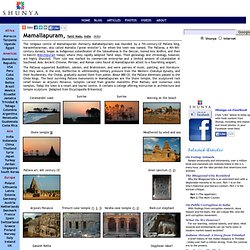
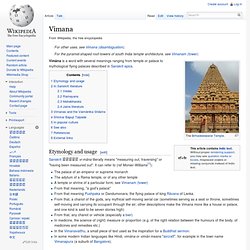
The Pallavas, a 4th-9th-century dynasty, began as indigenous subordinates of the Satavahanas in the Deccan, moved into Andhra, and then to Kanchi (Kanchipuram today), where they rapidly adopted Tamil ways. Their genealogy and chronology, however, are highly disputed. Their rule was marked by commercial enterprise and a limited amount of colonization in Southeast Asia. Ancient Chinese, Persian, and Roman coins found at Mamallapuram attest to a flourishing seaport. Vimana. Vimāna is a word with several meanings ranging from temple or palace to mythological flying palaces described in Sanskrit epics.
Etymology and usage[edit] Sanskrit विमान vi-māna literally means "measuring out, traversing" or "having been measured out". It can refer to (ref Monier-Williams[1]): In Sanskrit literature[edit]