
Edgar People sur Twitter : "Chaque semaine, @EdgarPeople vous présente un métier du #digital Qui est le #startup mentor. La star des startups - Edgar People. A l’heure où les incubateurs, accélérateurs, pépinières et autres espaces de coworking ++ poussent comme des champignons, un nouveau métier a fait éruption sur le marché.

Il existe pourtant depuis longtemps mais aujourd’hui il s’institutionnalise, fait apparition dans les grands groupes et devient la nouvelle problématique des Ressources Humaines qui s’arrachent les cheveux sur ces profils hybrides et insolites. C’est bien ça, le Startup Mentor est dans la place. [La France a d'incroyables start-up] EmploiBox. Startups, votre banquier est mort. Quelques petites choses à savoir sur le recrutement en startup. Construire une équipe ne s’arrête pas à trouver les bons associés (même si, dans la réalité, ça s’arrête souvent là, malheureusement), mais tout l’intérêt de la chose commence au moment où il faut structurer ses équipes, et donc embaucher.
Cette étape est cruciale pour l’entreprise. It’s Morning in Venture Capital. This article originally ran on PEHub.

If you prefer the super short version – I’ve summarized the post in the final section. Many observers of the venture capital industry have questioned whether its best days are behind it. They are frustrated by the past decade of subpar returns for the sector. The most recent report to weigh in on the troubles of the industry was produced by the esteemed Kauffman Foundation. There are obvious reasons the industry has had less-than-desirable returns, including: massive over-funding of the sector, huge increases in inexperienced venture capitalists that took a decade to peter out, and the massive correction in the value of the public stock markets that closed many exit opportunities for half a decade.
Why startup pitches fail (and how to fix them) Nivi · October 30th, 2008 Summary: Pitches usually fail because they answer the wrong questions.
The right questions depend on the stage of your business—for example, some businesses are just getting started with an idea, while others are printing money. Focus your pitch on the key questions for your stage and if you keep getting non-key questions, something is wrong with your pitch. This post includes a hierarchy that you can use to classify your business and the key questions for each stage in the hierarchy. Berlin Cracks the Startup Code. On a rainy day in March 2011, Ciarán O’Leary and two colleagues crammed into a Berlin taxi and raced for the station to catch a train back to Hamburg.

While snaking through the city streets, it hit him: Leaving Berlin was a bad idea. “We looked at each other and knew in that moment that we’d be crazy not to move here,” says O’Leary, a partner at the German venture capital firm Earlybird. “There was just so much happening—founders everywhere, in every bar, cafe, every corner.” Two weeks later, Earlybird rented office space in a former dance studio in central Berlin and opened up shop. Why Cheap Customers Cost More. I was listening to Patrick McKenzie’s podcast (with Amy Hoy as a guest), and they touched on something that I had heard before: when you offer multiple plans for a service, the cheapest plan’s customers tends to require the most support.

Now at first this seems counter-intuitive. You’d expect the opposite: that the people who pay the most feel more entitled to support, and thus ask for more of it. So if the cheapest customers truly require the most support, why is that? How Much Money Should a Startup Have in the Bank? By Jason Calacanis One question I get all the time from fellow entrepreneurs is “How much money should I have in the bank?”
In the startup industry we call this “runway,” and you’ll frequently hear management teams discuss how much runway they have in terms of months. Another name for the capital you have in the bank is “dry powder,” as in dry gunpowder your soldiers can use to kill and maim your enemies -- and win the war. Startups should have 18 months of runway. Demystifying the VC term sheet: Redemption rights. (Editor’s note: Scott Edward Walker is the founder and CEO of Walker Corporate Law Group, PLLC, a law firm specializing in the representation of entrepreneurs.

He submitted this column to VentureBeat.) For the past few months, I’ve been exploring some of the more confusing terminology in VC term sheets. In. So you want to do a startup, eh? Cash is King: 8 tips for Optimizing your Startup Financing Strategy. Introduction This post aims to help startup CEOs optimize their funding strategy by examining how investors value startups, and explaining how to avoid the common cash management pitfalls.
(Note: The concepts in this post will likely be obvious to experienced CEOs and entrepreneurs. Despite that, our experience indicates that entrepreneurs frequently make costly, avoidable mistakes with their financing strategy. Explicitly thinking it through may be of help.) Every smart CEO knows that they need to focus on building a compelling product, hiring a great team, maximizing sales and making their customers happy. In practice this means that the CEO should: Lean Startup : ma présentation sur le sujet. Construire une DreamTeam ! Voilà un sujet qui fait débat (en tout cas dans ma petite tête) : lorsque l’on monte sa boîte, de qui faut-il s’entourer ?
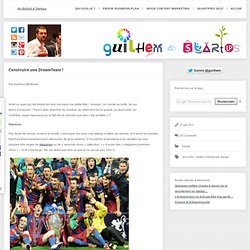
Faut-il aller chercher du nombre, au détriment de la qualité, ou faut-il être, au contraire, super rigoureux sur le fait de ne prendre que des « top profiles » ? Disrupt Videos. Mark Suster's NYU Q&A with Adam Penenberg. La Valeur Actuelle Nette ou comment choisir rationnellement d’investir dans une startup. Start-Up 100: the final list by category. #LEWINNING: Meet 12 Startups You'll Need To Reckon With. Amazon, Lendle and the Danger of Using Open APIs: Tech News and Analysis « Updated: Lendle, an ebook-sharing service that allows users to find and trade Kindle books, sounds like a great idea — except that it doesn’t work anymore, because Amazon pulled the plug on the site by blocking access to the Amazon API. According to Lendle co-founder Jeff Croft, there was no warning from the online retailer, only a cryptically worded email.
Relations Presse pour Startups : Pourquoi, quand, comment, avec qui? Why You Should Start Marketing the Day You Start Coding. Et ça existe en Amérique ? Je parlais hier d’une question qui revient comme un rituel lors des questions-réponses post-présentation de startups, celle de la scalability, ou capacité à grossir de manière industrielle. Where Good Ideas Come From. I've been reading my friend Steven Johnson's new book Where Good Ideas Come From. Steven gave me an advance copy of the book. It is available for pre-order at Amazon [kindle here] and it will be released on October 5th.
I hope Steven is not a stranger to any of you. His books over the past decade are some of my favorites and his take on the intersection between technology, science, society, culture, and innovation is unique and important. Good Ideas (as I call it) is an examination of the sources of creativity in all of us. Founder Institute: How To Launch In 10 Steps With Less Than $2,000. For any entrepreneur, the challenge of taking an idea to launch can be a daunting and expensive journey. Fortunately, Adeo Ressi, founder of TheFunded and startup accelerator, Founder Institute, has a ten step plan. While there is no foolproof recipe for every launch, Ressi says his template will help any tech entrepreneur get a business off the ground for less than $2,000.
The program, which Ressi recently presented at the Founder Institute’s Boston location, is a bare bones guide to securing your startup’s online identity, enhancing your appearance of legitimacy (through low-cost but well designed logos and marketing materials), understanding your startup’s priorities and target consumer, and finally, getting it to the point of a rough web launch.
Given that the presentation occasionally offers very specific advice (for example, step 3 centers on the use of 99designs for your logo), the ten step plan will hardly work for everyone. 1. 2. Establishing Your Reputation as a Startup CEO Before Launch. Yesterday, I wrote about the things you can do to prepare your startup's website pre-launch. But your online presence doesn't solely exist on and shouldn't solely rely on your company website. And it's incredibly valuable that just as you work on it, that you work to develop an online presence for you, the entrepreneur. How to Discuss Stock Options with Your Team. I was thumbing through Twitter messages on my Blackberry on Monday (I use Twitter as a “mobile first, web second” product) when I saw the following Tweet (see graphic). I resisted the temptation to jump in with a response because I knew it was too complicated of a topic to discuss on Twitter. But I thought I should do a quick post on the topic. 1.
Milestones to Startup Success. Update added to end of post When your startup accepts outside money (such as venture capital), you are obligated to focus on maximizing long-term shareholder value. For most startups this is directly based on your ability to grow (customers, revenue and eventually profit). Most entrepreneurs understand the importance of growth; the common mistake is trying to force growth prematurely. This is frustrating, expensive and unsustainable – killing many startups with otherwise strong potential. A quel moment arrêter sa startup. The Best Entrepreneurs Know How To Fail Fast (sic). Why Startups Fail « vcdave. An entrepreneur recently asked me why startups fail. Startups fail because they run out of money. You’re probably thinking, “Tell me something I don’t already know!” Read on and you’ll see that statement is deceptive in its simplicity This post is based both on my experience as an investor and as entrepreneur (when I’ve boot-strapped and venture-funded).
They spend too much on sales and marketing before they’re ready. Other times, this occurs with entrepreneurs who are accustomed to having lots of resources. Sometimes even when the product is great, the sales process itself isn’t understood to a point where it can be scaled: who are you selling to, how much will they really spend, and what profile of sales person does the company need to hire who will succeed at selling that particular product. The Top 10 Rookie Mistakes for Entrepreneurs. Lessons Learned From StartupBootcamp 2010. Lessons Learned From StartupBootcamp 2010 This is the first article from Jason L. Baptiste, a new writer at OnStartups and local Boston entrepreneur. 4 common mistakes in picking a co-founder. (Editor’s note: Scott Edward Walker is the founder and CEO of Walker Corporate Law Group, PLLC, a law firm specializing in the representation of entrepreneurs. Lessons Learned from a Software Developer’s First Attempt at Launching a Startup. Dissecting a Failed Indian Startup - India.
Lever 1,1 million d’euros et faire faillite. You Think You Have A Startup? You Probably Don't. Startup : comment choisir sa banque. Where can I find examples of successful series-A pitch decks. What Entrepreneurs Wish They Knew Five Years Ago - Fox Small Business Center. The Startup Pyramid. Key Elements of a Massively Scalable Startup.