
Beer Recipe Design. Over the years, I’ve come to realize that the basic principles of beer recipes design are often misunderstood and rarely well articulated.
This week we’re going to look at how you can design a great beer recipes at home using a tried and true process. What follows is an what I consider an overview of the essence of beer recipe design. Starting a New Recipe When I build a new beer recipe, I almost always start by picking a target beer style. This is not to say that the style defines the whole beer as there is plenty of room for interpretation and creativity, but by starting with a beer style, you establish the baseline for the beer you are going to brew. A good starting reference is the BJCP style guidelines. Choosing the Ingredients The next step in designing the beer is to pick appropriate ingredients. The BJCP style guide provides some information on typical ingredients used, but often does not have detailed breakouts of proportions. Brewing by the Numbers. How to Start a Microbrewery.
Beer and Food Pairings at Epicurious. F or centuries, if you asked a restaurant server in any mid-range to upscale American eatery what drink to pair with a certain dish, he'd bring over the sommelier and a wine bottle negotiation would ensue.
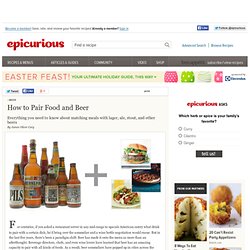
But in the last five years, there's been a paradigm shift: Beer has made it onto the menu as more than an afterthought. Beverage directors, chefs, and even wine lovers have learned that beer has an amazing capacity to pair with all kinds of foods. As a result, beer sommeliers have popped up in cities across the country, especially Los Angeles, Chicago, New York, and Portland, Oregon. Beer-and-food tasting events have multiplied exponentially—the monthly lists at beerfestivals.org are enormous. Nowadays, asking for a beer no longer means you're simply afraid of wine (or the type of person who wears face paint to football games).
Beer may actually be more food-friendly than wine is. Food and beer pairing issues: Complementary or contrasting flavors? Comparing beer to wine Examples: American Craft Brewing Hop - DIY Beer Brewing Hops. At the close of the 1970s, there were 44 brewing companies in the United States that all made nearly identical beers.
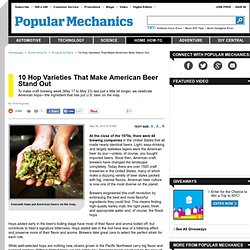
Light, easy-drinking and largely tasteless lagers were the American beer du jour—unless, of course, you bought imported beers. Since then, American craft brewers have changed the landscape completely. Today there are over 1500 craft breweries in the United States, many of which make a dizzying variety of beer styles packed with big, intense flavors. American beer culture is now one of the most diverse on the planet. Brewers engineered this craft revolution by embracing the best and most flavorful ingredients they could find. Hops added early in the beer's boiling stage have most of their flavor and aroma boiled off, but contribute to beer's signature bitterness. While well-selected hops are nothing new, strains grown in the Pacific Northwest carry big flavor and pungent aromas.
Cascade Cascade is the hop strain that put American beer culture on the map. Citra Centennial.