
Toccata & Fugue in d minor (BACH, J.S.) Original Fugue in C major (Klavier) in Baroque Style R 744. Fugue. The English term fugue originated in the 16th century and is derived from the French word fugue or the Italian fuga.
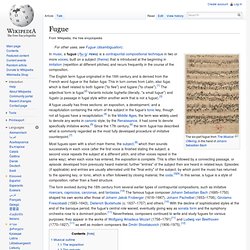
This in turn comes from Latin, also fuga, which is itself related to both fugere ("to flee") and fugare ("to chase").[1] The adjectival form is fugal.[2] Variants include fughetta (literally, "a small fugue") and fugato (a passage in fugal style within another work that is not a fugue).[3] Musical outline[edit]
The Fugue - The Baroque Fugue. The fugue is a type of polyphonic composition or compositional technique based on a principal theme (subject) and melodic lines (counterpoint) that imitate the principal theme.

The fugue is believed to have developed from the canon which appeared during the 13th century. The canon is a type of composition wherein the parts or voices have the same melody, each beginning at a different time. The fugue also has its roots from the ensemble chansons of the 16th century as well as the ricercari of the 16th and 17th centuries. The fugue has several different elements: