
Jumbo. Jabba. Unnamed pearl. Comes and Goes. Emerging Trends. Organizational Level-Alignment. How to Get a Copy of Your FBI File (idea) The Freedom of Information Act is a powerful thing.
Wisdom's kid. 8x reviews. Bookmarx Quest. 17 Mind Blowing Libraries From Around The World. The future needs fixing - the future needs fixing - sugru. Food Dehydrators. Redefining Progress - About Sustainable Economics. An example of an indicator that measures both is the Genuine Progress Indicator (GPI).

The GPI is an alternative to the GDP that better captures the effect of economic activity on human well-being. The Gross Domestic Product is simply a measure of the volume of market transactions in an economy, whether they represent activities that increase well-being or detract from it. Increases in national insecurity that cause us to buy more weapons, increases in sickness that cause us to buy more health care, and increases in crime that cause the victims to buy replacement products, all increase GDP but reduce well-being. Equinox Passive House / Ignatov Architects. Tucked into the coastal hillside near Kavarna, Bulgaria the newly completed Equinox House by Ignatov Architects explores a novel approach to achieving passive house energy performance.

The home’s celestial name sake is well deserved for the careful consideration of solar orientation of the large, super efficient windows, angled to shed summer heat but absorb the fleeting winter energy. Extremely airtight construction testing at 50% better than passive house standards and super-insulation provides a 90% reduction in heating needs. Set to parallel the solar solstice sun at noon the tilted windows are a singularly critical design element. Bhutan To Be First Country to Go 100% Organic. If there was ever a nation that could see the purpose behind organic, sustainable farming, it would be a nation that is composed mostly of farmers.
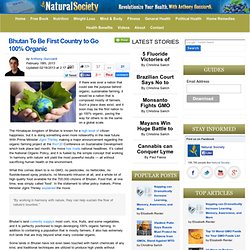
Such a place does exist, and it soon may be the first nation to go 100% organic, paving the way for others to do the same on a global scale. The Himalayan kingdom of Bhutan is known for a high level of citizen happiness, but it is doing something even more noteworthy in the near future. With Prime Minister Jigmi Thinley making a major announcement regarding the organic farming project at the Rio+20 Conference on Sustainable Development which took place last month, the move has made national headlines. It’s called the National Organic Policy, and it is fueled by the simple concept that working ‘in harmony with nature’ will yield the most powerful results — all without sacrificing human health or the environment. RedOrbit – Science, Space, Technology, Health News and Information.
News. Dag nab Terrorists. "Hacktivists" Fight Terrorism From Their Home Offices. Article written by guest writer Kecia Lynn What's the Latest Development?

Citizen "hacktivists" are working to infiltrate Web sites belonging to terrorist organizations and their supporters, supplying the US military and FBI with data that can be used to help identify individuals and activities. Because this network of individuals isn't "official" or organized, the data supply is "a one-way street," according to Jeff Bardin, a former Air Force linguist who has spent years developing various personas that he uses to penetrate terrorist sites. He became a hacktivist after entering Al Qaeda bulletin boards and seeing videos of attacks on US soldiers.
Stocks Fall as Traders Focus on Japan Crisis. The anxiety was heightened by increasing volatility as stocks, bonds and currencies alike swung sharply through the course of a trading day punctuated by worsening news reports about Japan as well as word that police and riot troops had clashed again with protesters in Bahrain.

“There is so much uncertainty about the Japanese situation and the Middle East that people are just struggling to quantify them,” said Barry Knapp, head of American equity strategy at Capital. Japanese stocks seemed set for another volatile trading day Thursday, amid reports that foreign financial firms are pushing Japanese stock market officials to halt trading. Japan Finds High Radioactive Materials in Spinach and Milk. While officials played down the immediate risks to consumers, the findings further unsettled a nation worried about the long-term effects of the hobbled reactors.
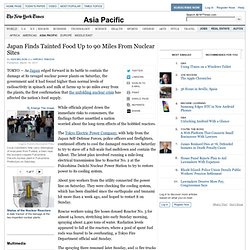
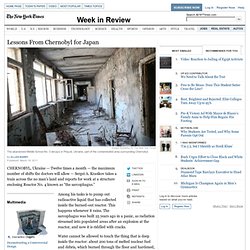
The Tokyo Electric Power Company, with help from the Japan Self-Defense Forces, police officers and firefighters, continued efforts to cool the damaged reactors on Saturday to try to stave off a full-scale fuel meltdown and contain the fallout. The latest plan involved running a mile-long electrical transmission line to Reactor No. 2 at the Fukushima Daiichi Nuclear Power Station to try to restore power to its cooling system. Lessons From Chernobyl for Japan. Joseph Sywenkyj for The New York Times The abandoned Middle School No. 3 decays in Pripyat, Ukraine, part of the contaminated area surrounding Chernobyl.
Japan’s Government Likely to Bear Much of the Loss. Japanese insurance companies, global insurers and reinsurers, hedge funds and other investors in catastrophe bonds are all expected to bear a portion of the losses that seem likely to exceed $100 billion.
Total damage from the 1995 earthquake in Kobe, Japan, was estimated at $100 billion, according to the Insurance Information Institute, but only about $3 billion of that was covered by insurance. The greatest uncertainty surrounds contamination from the nuclear accident prompted by the earthquake and tsunami. Operators of nuclear plants in Japan are required to buy liability insurance through the Japan Atomic Energy Insurance Pool, an industry group. But they are required to buy coverage of only about $2.2 billion for liabilities, and the pool does not sell the utilities coverage for earthquake damage or business interruptions, suggesting it will again be up to the Japanese government to bear the brunt of those costs.
‘Too Late’ for Some Tsunami Victims to Rebuild on Japanese Coast. Kunio Imakawa, a 75-year-old barber, was not among them.
Mr. Quake in Japan Broke a Link in Global Supply Chain. A disruption in silicon wafer production can then stall makers of memory chips and, ultimately, consumer products. Mr. Prophet oversees all hardware purchasing for H.P.’s $65-billion-a-year global supply chain, which feeds its huge manufacturing engine. Un Français invente la voiture qui ne coûte rien (ou presque) Et s’il était possible de circuler en voiture gratuitement ? Martin Belam's Forecast on Online Reaction to Margaret Thatcher's Death. Margaret Thatcher, Conservative Who Reforged Britain, Dies. Lady Thatcher: 'the prime minister who changed the world' - video obituary. Margaret Thatcher: In every sense a leader.
Margaret Thatcher is dead - now the inquest must begin on her life and influence - Paul Routledge. She changed everything, and for millions it was change for the worse. There was nothing like her before, and there has been nothing like her since. Thank God. 52 Totally Feasible Ways To Organize Your Entire Home. How to Get Oragnized - 100 Organizing Tips. The meals, the kids, the housework, the job…the only way to stay sane is to get organized. Fat chance, you say? Sunrise Brilliantly Redefines Calendar Apps On iOS. Useful Life Hacks Part 2. Useful Life Hacks Part 3. Useful Life Hacks. Slow Computer: How To Fix A Slow Computer By Disabling Unnecessary Windows Services.
Optimize Vista by Disabling Unused, Unneeded or Unnecessary Windows Services ? My Digital Life. Map_of_humanity. MIT Study Finds What Makes an Image Memorable. A study conducted by MIT researchers showed that the most memorable photos are those that contain people, followed by static indoor scenes and human-scale objects. Perception puzzles, Visual Perception, Optical illusions and Paradoxes. Photos: Everyday objects that look like solar system planets. 50 surprises de Google Street View, volume 2. Partager cette image. Crowd Funding Photojournalism. World Photography Organisation. Produced by the World Photography Organisation, the internationally acclaimed Sony World Photography Awards are one of the most important fixtures in the photographic calendar.
The Awards are a global voice for photography and provide a vital insight into contemporary work today. For both established and emerging artists, the Awards offer extensive exposure. Liquid Sculpture - Water Drops. Liquid Sculpture - Water Drop Art. Finding Vivian Maier: A New Documentary About One of the World’s Most Mysterious Street Photographers. A Letter to Our Readers About Digital Subscriptions. The New York Times. Terms of Sale. Yosemite hantavirus warning could be expanded to other countries. Crises. New 2 Do. Maybe Someday. Memento. New Research Info. 100th Meme Keys. GROK. ENGAGING SITES. Modern Culture. WORLD VIEWS. Gadgets. Tech Advances.