
Lecture Rapide, Mémoire et Mind Map pour Apprendre Vite et Bien. Apprendre_v11.jpg (Image JPEG, 2115x1297 pixels) - Redimensionnée (75%) Thèses. Les Multibrios. Les Multibrios... les connaissez-vous ?
J'ai été séduite par la théorie des Intelligences Multiples développée par Howard Gardner. A l'école, apprendre à mieux connaître un élève, le valoriser pour ses talents propres, s'appuyer sur son intelligence forte pour lui permettre d'entrer dans les apprentissages et développer chez lui d'autres intelligences... c'était pour moi tout un programme.
Lorsque je travaillais en regroupement d'adaptation, pleine de bonnes intentions, je me suis vite rendue compte que ce n'était pas facile d'expliquer aux enfants ces huit intelligences, or il était nécessaire qu'ils se les approprient et qu'ils puissent prendre conscience de leur intelligence forte. C'est alors que j'ai rencontré les Multibrios au hasard de mes recherches sur le Web et ils m'ont permis de mettre en pratique la théorie des Intelligences Multiples. Avec eux, tout est devenu facile, et les Intelligences Multiples ont dès lors fait partie du quotidien de ma vie de classe, tout simplement. Intelligences multiples - Idées ASH. Le contenu de ces pages est issu essentiellement de mes notes personnelles d'une intervention très enrichissante de Bruno HOURST, lors d'une conférence pédagogique. Professeur de mathématiques, Bruno Hourst a cherché une approche pédagogique qui permette aux élèves en difficulté scolaire - mais qui ont tous des richesses - de pouvoir apprendre en exploitant ces richesses.
Cette approche pédagogique vient d’un mouvement anglo-saxon qui s’est posé la question de savoir pourquoi certains mémorisent très vite. « La suggestopédie » du bulgare Georgi Lozanov. Cela n’a pas pris en France. L’approche pédagogique du mieux-apprendre s’appuie sur quelques principes clés : Intelligences+multiples.jpg. Biais cognitifs insolites : L'effet Google et la mémoire homme-machine.
Décrit et mis en évidence par Betsy Sparrow (Columbia), Jenny Liu (Wisconsin) et Daniel M.
Wegner (Harvard) en Juillet 2011, l'effet Google est la tendance à oublier l'information facilement accessible si on la cherche sur Internet à partir des moteurs de recherche (tel que Google, Yahoo, etc...), plutôt que de la retenir en mémoire (par rapport à l'information peu accessible). Google-brain Notre mémoire se transformerait-elle en moteur de recherche? La philosophie et les stratégies qui sous-tendent l'élaboration et le perfectionnement du célèbre Search engine, ont toujours consisté à mimer le plus parfaitement possible "ce que ferait un cerveau humain lorsqu'il recherche une information", de sorte que Google fasse exactement ce que l'on ferait (mais beaucoup plus rapidement et de façon automatique) si l'on souhaitait chercher une information dans la mémoire collective que représente le web d’aujourd’hui.
Méthode denseignement en Finlande (1er dans létude PISA) : savoir apprendre pour sortir de l'échec scolaire. Reportage France 3 © (Si vous n'arrivez pas à lire la vidéo, utilisez le navigateur firefox) Télécharger Firefox ;;;;;• Une carte heuristique qu'est-ce que c'est? Une carte heuristique (mind map en anglais), également appelée carte des idées, carte conceptuelle, carte mentale, arbre à idées ou topogramme, est un diagramme qui représente les connexions sémantiques entre différentes idées, les liens hiérarchiques entre différents concepts intellectuels.
À la base, il s'agit d'une représentation principalement arborescente des données, basée sur les mêmes principes que l'organigramme (l'un étant en fait une variante de l'autre et réciproquement). C'est par exemple un moyen visuel et symbolique de décrire l'architecture informatique générale d'un PC : Exemple de carte heuristique. Les secrets de l’éducation à la finlandaise : chaque élève est important. Depuis plus de dix ans le système éducatif finlandais fait figure de modèle en Europe et plus largement dans les pays occidentaux.
Ce petit pays a obtenu des résultats faramineux aux évaluations internationales PISA[1] menées par l’OCDE (2ème mondial en Sciences, 3ème en lecture et 6ème en mathématiques en 2009, loin devant tous les pays occidentaux). Pour comprendre ce phénomène, Paul Robert, principal de collège dans le Gard, a participé à deux voyages d’étude en Finlande. Il a pu y visiter des établissements scolaires de tous niveaux : un jardin d’enfants, deux écoles primaires, deux collèges, deux lycées, un lycée professionnel, une université et un centre de formation continue. Il en a tiré un livre, La Finlande : un modèle éducatif pour la France ? Les secrets de la réussite et un passionnant rapport dont voici les points forts. Guide pratique d'une pédagogie active. Les 7 clefs de la pédagogie active. Proposées par Cendrine Massel, alors directrice de Latitude Formation, ces "sept clés" sont extraites de l’article "Le ludique demande beaucoup de sérieux !
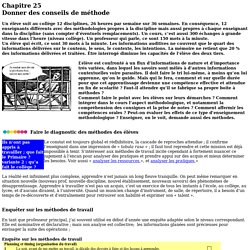
", publié dans le n° 224-225 de notre revue Actualité de la formation permanente. Voici le fruit de notre expérience et ce que nous constatons dans nos différentes missions de “revamping” de modules que nous menons auprès de différents industriels et organismes de formations clients. Donner des conseils de méthode. Chapitre 25 Donner des conseils de méthode Un élève suit au collège 12 disciplines, 26 heures par semaine sur 36 semaines.
En conséquence, 12 enseignants différents avec des méthodologies propres à la discipline mais aussi propres à chaque enseignant dans la discipline (sans compter d’éventuels remplacements). Un cours, c’est aussi 300 échanges à grande vitesse dans l’heure (niveau collège). Apprendre/Se documenter. Thomas Piketty. Management et innovation. Pédagogie inversée. Notre corps est notre temple. OuiShare. Retrouvez l’intégralité de ce billet sur le blog d’Antonin.
OuiShare a quatre mois. Nous réunissons pour la première fois la communauté européenne pour une journée de conférences et de workshops autour des acteurs européens de l’économie collaborative. L’occasion de faire un rapide bilan d’une aventure qui a commencé avec mon blog et qui se poursuit avec OuiShare. Un an et demi de blog : rapide bilan Il y a un an et demi, je lançais mon blog avec pour objectif d’informer, en langue française, sur la consommation collaborative, avec notamment deux intuitions : la montée en puissance à venir du mouvementla présence en France d’un terreau fertile à son développement (maturité dans les usages d’internet et des réseaux sociaux, appétence au partage, culture de la débrouille) Ce blog était aussi le témoignage d’un utilisateur passionné, pour lequel le collaboratif est devenu un style de vie.
OuiShare : la communauté de l’économie collaborative Ce blog, c’était un peu tout cela. #OuiShareLove. Je suis un être humain ! Galeries de cartes. MOOC, phénomène de mode ou opportunité pour les RH ? InShare22 Inriality nous présente une infographie ayant pour thématique les MOOCs et le système scolaire.

Nous vous en proposons une synthèse. Le MOOC : un outil marginal en France Les MOOCs sont surtout utilisés par des établissements scolaires supérieurs : MOOCs and Higher Education’s Non-Consumers. Dialogue autour des MOOC Le webinaire du 17 octobre était attendu : les MOOC - ces cours délivrés gratuitement en ligne ayant vocation à toucher des dizaines de milliers d'apprenants - ont toute l'apparence d'une "révolution attendue" pour reprendre une expression utilisée dans le webinaire, même si certains peuvent contester l'idée que les MOOC soient une innovation "car on n'a pas attendu 2013 ou 2014 pour disposer de ressources pédagogiques gratuites sur le Web - la preuve, par exemple avec Wikipedia ou avec les chaînes de formation linguistique à distance qu'on a vu se développer sur YouTube" comme l'a rappelé Michel Diaz.
Philippe Delanghe a commenté quelques mots clés autour de la notion de MOOC, notamment cette rupture dans les pratiques de formation, alors que "l'on continue d'enseigner à l'université à peu près de la même manière qu'il y a 50 ans", et que, au grand regret du Directeur général d'UnI Learning France "le e-learning reste une modalité de formation encore marginale dans les entreprises". MOOC ou pas MOOC [FR] Le monde des TIC et de l’enseignement supérieur s’agite depuis quelques mois sur la question des MOOC’s, ces cours en ligne ouverts et massifs, qui sont censés être le vecteur d’une révolution numérique.
![MOOC ou pas MOOC [FR]](http://cdn.pearltrees.com/s/pic/th/toujours-education-eduveille-50852673)
On y trouve tous les ingrédients qui avaient déjà été servis pour annoncer la fin de l’université traditionnelle au début des années 2000 : les “nouveaux” étudiants qui seraient familiers du numérique, le retard des universités européennes (et françaises) par rapport aux ogres américains, le “brain drain” (pillage de cerveaux) qui se met en place au profit des grandes universités anglo-saxonnes, la source de profits incommensurable “à terme”, la fin des diplômes traditionnels, etc.
Cette fois sera-t-elle la bonne ? Bien malin qui peut y répondre aujourd’hui. On peut en revanche avancer déjà deux idées pour appréhender une partie du phénomène. Udacity [EN] MOOC et GLOBAL EDUCATION [EN] As online education platforms like Coursera, edX, and Udacity burst onto the scene over the past year, backers have talked up their potential to democratize higher education in the countries that have had the least access (see “The Most Important Education Technology in 200 Years”).
![MOOC et GLOBAL EDUCATION [EN]](http://cdn.pearltrees.com/s/pic/th/challenge-providing-technology-53441346)
These ambitions are now moving closer to reality, as more people begin to experiment with their setup, although significant challenges remain. Students in countries like India and Brazil have been signing up in droves for these massive open online courses, or MOOCs, offered for free from top-tier universities, such as Stanford, MIT, and Harvard. Leeaarn [FR] MOOC et GLOBAL EDUCATION [EN] Khan Academy. MOOC vs. SPOOC - et la France dans tout ça ? Les MOOC débarquent en France ! L’acronyme pourrait faire penser au dernier personnage de Star Wars, mais on parle ici des Massive Open Online Courses, c’est-à-dire des cours en ligne ouverts à tous. En effet, début octobre, le gouvernement a lancé le site FUN (pour France Université Numérique – notez que cette fois, l’acronyme est sympa, pour le secteur de l’éducation !). L’objectif de ce site, un peu sur la lignée de son équivalent européen Open Education Europa, est de délivrer des cours d’universités et d’écoles, de tous les domaines, en ligne et gratuitement, à tous ceux qui voudront bien s’y intéresser.
Pour l’instant, quelques cours sont delà listés sur le site, regroupés sous différents thèmes, mais ils ne seront pas accessibles avant début 2014. Des MOOC français, innovants, généreux et précurseurs. Des MOOC français, innovants, généreux et précurseurs. Mettre en place un MOOC : Dossier de conseils et bonnes pratiques. Toute l'actualité en direct - photos et vidéos avec Libération - Libération. Outils collaboratifs. Didactique. Intelligences Multiples : présentation. Présentation Parmi les nombreuses grilles d'intelligences qui ont été élaborées, la théorie des Intelligences Multiples d'Howard Gardner a le mérite d'être particulièrement simple à comprendre (car parlant bien à l'intuition) et pratique à utiliser dans une quelconque situation d'apprentissage.
Son succès dans le monde anglo-saxon depuis sa parution en 1983 a été considérable, en particulier dans les champs de l'éducation et de la formation permanente. Elle a fait l'objet de très nombreux livres d'application en langue anglaise. Les Réseaux Sociaux comme Outils Pédagogiques. Intelligences multiples - Idées ASH. Le contenu de ces pages est issu essentiellement de mes notes personnelles d'une intervention très enrichissante de Bruno HOURST, lors d'une conférence pédagogique.
Professeur de mathématiques, Bruno Hourst a cherché une approche pédagogique qui permette aux élèves en difficulté scolaire - mais qui ont tous des richesses - de pouvoir apprendre en exploitant ces richesses. Cette approche pédagogique vient d’un mouvement anglo-saxon qui s’est posé la question de savoir pourquoi certains mémorisent très vite. « La suggestopédie » du bulgare Georgi Lozanov. Cela n’a pas pris en France. Management et innovation : 60 nouveaux exercices pour apprendre ensemble. Initiation à la neuroéducation. Pédagogie ouverte : présentation à partir d’un exemple. Neurosciences. De l’autoformation au compte individuel de formation. Bibliothéque de l'apprenance.
"Innover en formation". Développer une culture d'apprenance. Développer une culture d'apprenance. Bibliothéque de l'apprenance. Bibliothéque de l'apprenance. The 10 Most Educated Countries in the World. In the past 50 years, college graduation rates in developed countries have increased nearly 200%, according to Education at a Glance 2011, a recently published report by the Organisation for Economic Co-operation and Development (OECD).
The report shows that while education has improved across the board, it has not improved evenly, with some countries enjoying much greater rates of educational attainment than others. TEDx Wilfrid-Bastien: 18 minutes pour changer l’éducation. TEDx Wilfrid-Bastien: 18 minutes pour changer l’éducation. RSA Animate - Changing Education Paradigms. Apprendre : une affaire de connexion et répétition. Apprendre à apprendre.
Qu'est-ce que la différenciation pédagogique? La pyramide des besoins de Maslow d’un point de vue pédagogique. Le psychologue Abraham Maslow a établi une hiérarchie des besoins en faisant des recherches sur la motivation. La boite à outils du formateur innovant " Format... Social Computing. Community-intelligence. Intelligence collective. Intelligence collective. Séminaire Intelligence Collective. Collective intelligence MIT panel. Intelligence collective. Un article de Wiki Paris Descartes.
Des clés pour comprendre l'Université numérique Capacité des collectivités humaines de coopérer sur le plan intellectuel pour créer, innover, inventer. Collective Intelligence: Creating a Prosperous World at Peace. Evolution de l'Intelligence Collective dans le monde et en France. Olivier Zara - Consultant en management & médias sociaux - Montréal Quebec Canada. Sol France. Carl Gustav Jung. Notes à partir du livre "Dialectique du Moi et de l’inconscient", Folio essai, 1964 - de C.
G. Jung, Die Beziehungen Zwischen dem Ich und dem unbewussten, Ed Rascher, Zurich 1933 Notes du 27 juillet 2002 Le Soi et le Moi Le Soi est un ensemble complexe de la personnalité qui englobe le conscient et l’inconscient individuel. Les RH sont-elles en passe de changer le monde des entreprises en s'appuyant sur les réseaux. Evolution de la conscience humaine. Evolution de la conscience humaine.
Coursera commits to admitting only elite universities.
Outils et ingénieurie de formation. Find Software. Intelligence collective. Knowledge management. Nait-on innovateur ou le devient-on ? Bulletins-electroniques.com : toute l'actualité technologique internationale en français, en accès libre et gratuit ! Le Collectif. Mooc21.jpg (816×526) How EdX Plans to Earn, and Share, Revenue From Free Online Courses - Technology.
Dr. Keith Devlin: Can Massive Open Online Courses Make Up for an Outdated K-12 Education System? Learning Sciences and Learning Analytics: Time for a Marriage. Stanford, Harvard Scholars Dissect Big Data. Synthesising MOOC completion rates. U. of California faculty union says MOOCs undermine professors' intellectual property. Fondation Télécom - La Fondation de l'Institut Télécom, pour la formation, la recherche et l'innovation.
La Mémoire. Les TICE. Formation permanente Web TV AFPA. Méthodes pour tous. What Part of MOOC Don't You Understand? A list of connectivist MOOCs. Help. Apprendre à apprendre. Web 2.0. Formation.