
Van der Kapel Mathieu
Journaliste
ASTRO. TRIBU. Aide en français. Vidéos Pearltrees. Help. Ancient Civilizations. Origins. ATLANTIS. Fictional island in Plato's works, now a synonym for supposed prehistoric lost civilizations Athanasius Kircher's map of Atlantis, placing it in the middle of the Atlantic Ocean, from Mundus Subterraneus 1669, published in Amsterdam.
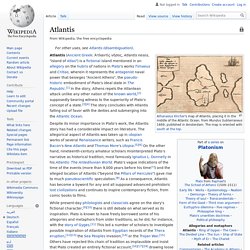
The map is oriented with south at the top. While present-day philologists and classicists agree on the story's fictional character,[9][10] there is still debate on what served as its inspiration. NEANDERTHAL. The exact date of their extinction is disputed.
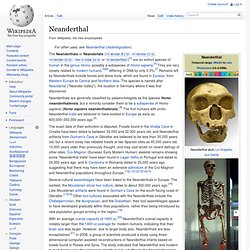
Fossils found in the Vindija Cave in Croatia have been dated to between 33,000 and 32,000 years old, and Neanderthal artifacts from Gorham's Cave in Gibraltar are believed to be less than 30,000 years old, but a recent study has redated fossils at two Spanish sites as 45,000 years old, 10,000 years older than previously thought, and may cast doubt on recent datings of other sites. Cro-Magnon (Eurasian Early Modern Human) skeletal remains showing some "Neanderthal traits" have been found in Lagar Velho in Portugal and dated to 24,500 years ago, and in Cioclovina in Romania dated to 35,000 years ago, suggesting that there may have been an extensive admixture of the Cro-Magnon and Neanderthal populations throughout Europe.[10][11][12][13][14][15] With an average cranial capacity of 1600 cc,[20] Neanderthal's cranial capacity is notably larger than the 1400 cc average for modern humans, indicating that their brain size was larger.
Mystere.