
HAU: Journal of Ethnographic Theory. As every experienced fieldworker knows, the most difficult task in social anthropological fieldwork is to determine the meaning of a few key words, upon an understanding of which the success of the whole investigation depends. – E.
E. Evans-Pritchard. Welcome to Open Access Anthropology. Zero Anthropology Project. Top 100 Anthropology Blogs. Digital Ethnography - @ Kansas State University. Living Anthropologically. The statues of Easter Island could have "walked" into place. There've been various mechanisms proposed for moving the moai.
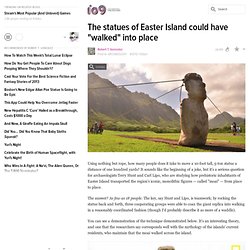
Another suggested technique involved sliding them on a layer of small round rocks, and then raising them upright by piling small rocks underneath them, lifting them a little, piling more rocks under them, and so on. This always seemed plausible to me as - having hiked across Easter Island - I can confirm that the island has an abundant supply of small round rocks. Moreover, they roll extremely well, particularly if you're unlucky enough to put your foot down on them. (insert unhappy face)