
Hilarious Celebrity Portraits. New York-based photographer Martin Schoeller loves to make us laugh!

Take a look at his celebrity portraits of everyone from Quentin Tarantino to Chris Rock and you'll notice a common theme running throughout his work. They're wonderfully wacky! Having worked as an assistant for Annie Leibovitz from 1993 to 1996, Schoeller has the guts to create dramatic scenes that call for his subjects to work outside the box.
He's been a staff photographer at The New Yorker since 1999 and his work has appeared in magazines like Rolling Stone, Esquire, Vogue and Vanity Fair. Abraham and winston » Kristin Rachelle Photography. I cannot believe it has taken me until now to share these!!

This adorable duo belong to my 1st cousin, Joleen and her husband Eric. Joleen moved away a few years back so back in December was the first time I got to meet little Abraham and Winston. Newborn, Baby and Wedding Photography in Melbourne. My last day in Canada.

It is right that it deserves a post of its own(…. well, two posts, stay tuned!). The incredible Raye Law also came to visit the Brown household, and so for my very last day I was surrounded by such amazing talent from two wonderful photographers and friends. Being able to work together to create beautiful memories for such a special little person brought such joy. These women are inspiring. It was such an honour to even be there at that time to welcome Will into the world, but to have those two women by my side that day, made it a day I will not soon forget. It was, quite simply, magic. In the afternoon, Raye and I captured some of the most amazing moments of tenderness and connected love between Will and his beautiful parents (of which Raye got my favourite shot of the day), and I can’t wait to share those very soon. But, for now, my goodbye images of the strong, handsome, loving and inquisitive Will Brown… Photography by Lorissa.
Ann Arbor Mi baby photography Love is a symbol of eternity.

It wipes out all sense of time, destroying all memory of a beginning and all fear of an end. ~Author Unknown I step behind my camera and all things going on in my life seem to fade away. At first I thought perhaps it was because I was lost in my art….now I realize it wasn’t that but I was lost in that moment. Shutterfly. Portrait Photography Tips - How to Capture Stunning Pictures of Your Children. Fine Art Photography Galleries.
Canon and Nikon Calibration Presets. Wedding & Portrait Photographer. 175710822931190910_7xHY2PfK.jpg (500×450) Peekaboo Photos Blog. Best UK Wedding Blog. Postcards and pretties. One big photo - StumbleUpon. Hilarious Celebrity Portraits - My Modern Metropolis - StumbleUpon. One big photo - StumbleUpon. Family, Pregnancy, Newborn, Baby, Professional Photographer Portrait Studios, Maternity Photography, Portrait Photographers, Los Angeles Photographers.
Sydney wedding photography by Daniel Griffiths. Fusion Photography - premium wedding photography services & bridal portraiture. Cliff Mautner Photography. APERTURA - Wedding & Portrait Photography of Ray Soemarsono & Er. Jean-Pierre Uys Photography. Southern California Professional Photographer Southern CA Weddin. Portraits at Desi Baytan Pho. International destination wedding photographer. Sloan Photographers. New York Wedding Photographers & Desti. Sarah Yates Los Angeles and Destination Wedding Photography. JENNIFER SKOG {skog as in vogue} Amy & stuart. Cheri Pearl Photography. Los Angeles Wedding, Boudoir, Mater. { CHENNERGY } international wedding photo/video. Belathée Photography - New York. Garrett Nudd Photographer - Orlando - Chattanooga - Atlanta - De. Kodak UK Wedding Photographer of the Year – Ken Lam. Vancouver Island Wedding Photographer. Jeff Newsom - Wedding Photographer - San Luis Obispo, Santa Barb.
Boutwell Home. J Garner Photography. Wedding & Portrait Photography in Chicago. Photoshop tips, tutorials and lessons for photographers. Web Resources, Design Inspiration, and Fun Spill! Photoshop CS4: A Picture Worth a Thousand Words. I love Photoshop techniques that offer all kinds of possibilities for experimentation—and the following tutorial is a perfect example of one of those techniques.
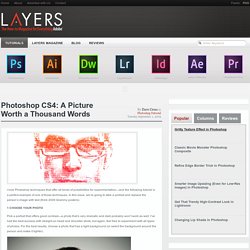
In this issue, we’re going to take a portrait and replace the person’s image with text (think 2009 Grammy posters). Pick a portrait that offers good contrast—a photo that’s very dramatic and dark probably won’t work as well. I’ve had the best success with straight-on head and shoulder shots, but again, feel free to experiment with all types of photos. For the best results, choose a photo that has a light background (or select the background around the person and make it lighter). Create a new document (File>New) in a size that’s smaller than your photo: the specifics don’t really matter. Switch back to the photograph.
Then, press Command-J (PC: Ctrl-J) to copy the selected pixels onto a new layer. Go back to the Select menu and choose Color Range again. Click the Create a New Layer icon at the bottom of the Layers panel. Tim Flach. For the Modern Vintage Bride. Wedding Blog South Africa. Selective Focus SLR Camera Lenses. LIFE - Your World in Pictures. Feaverish Photography Blog. VII Photo Agency. Photography Served. Fotografia - Intenta, Desarrollo Web y Recursos. Pantone Project es el proyecto del fotógrafo Paul Octavious con el que ha querido sacar fotos cotidianas siguiendo los famosos colores Pantone.
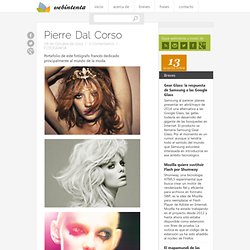
Las fotos inicialmente se subieron a su cuenta de Instagram y se han hecho famosas en la red gracias a su creatividad y las emociones que logran transmitir. Paul Octavious » » Beautiful Photo. Yosemite Winter Storm. Time Lapse Photo of Toronto. © gillesvidal - photographe. Tim Flach Photography
Photography. Block Posters - Create large wall posters from any image for free! Creating PICTURE Frames in Corel Photo-Paint, versions 8+ (Part 1) Creating PICTURE Frames in Corel Photo-Paint, versions 8+ by David Mutch, © January, 2003 Part 1: Creating a basic Picture Frame.
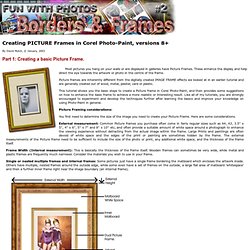
Most pictures you hang on your walls or are displayed in galleries have Picture Frames. These enhance the display and help direct the eye towards the artwork or photo in the centre of the frame. Picture frames are inherently different from the digitally created IMAGE FRAME effects we looked at in an earlier tutorial and are generally created out of wood, metal, plaster, card or plastic. This tutorial shows you the basic steps to create a Picture frame in Corel Photo-Paint, and then provides some suggestions on how to enhance the basic frame to achieve a more realistic or interesting result.
Picture Framing considerations: You first need to determine the size of the image you need to create your Picture Frame. Frame Width (Internal measurement): This is basically the thickness of the frame itself. Fig 1. Creating the basic Picture Frame. 1. 2. 3. 4. 5. 6. 7. 8. Objetivos. 420337_3393884693166_1451135121_2956258_333002788_n.jpg (395×502) Symmetrical Faces. Block Posters - Create large wall posters from any image for free!