
35 Excellent Wireframing Resources - Smashing Magazine. Advertisement Wireframing is one of the most valuable parts of any web design project. It can save a designer tons of time by hashing out the details of a site’s architecture, functionality, and content prior to actually starting a visual design. But if done inefficiently, it can end up costing more time and can even create bigger headaches for both the client and the designer. Below are more than 35 resources for creating better wireframes, including tutorials on different methods and a variety of tools available. 1. Here are more than twenty wireframing articles, guides, and tutorials to help you improve your wireframing process. Wireframes Magazine This site offers tons of resources and articles about wireframing.
Wire Frame Your Site A great introduction to the benefits of wireframing from Sitepoint. Ajax Wireframing Approaches A post in a series from Particletree about prototyping Ajax, this covers wireframing techniques. Framing the Problem An article about wireframing from ClickZ. Sitemap taxonomy - To classify web content. Sitemap taxonomy - To classify web content Sitemap taxonomy is a way to classify the tremendous amount of information available on the World Wide Web.
Organizing web content is a lot of work that requires manpower and money. But creating sitemap taxonomy is a process that must be done in order to make information readily available to users. Often times the information is there but users are unable to access it. With the sitemap taxonomy, web content is arranged in such a way that the user will be able to use it effectively. Impact of sitemap taxonomy to Internet marketing Sitemap taxonomy can be a big boost to Internet marketing. Most of the time online users form searches that often turn up useless or non-relevant results. Unfortunately not all users have the patience to keep guessing until they find the right keyword. Building a sitemap taxonomy Many people may think that building sitemap taxonomy is an easy simple process of putting together keywords. Do-it-yourself sitemap taxonomy. The what, when and why of wireframes. In the presentation I attempted to answer these questions; Wireframes • What are they?
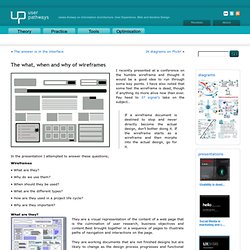
• Why do we use them? • When should they be used? • What are the different types? • How are they used in a project life cycle? • Why are they important? What are they? They are NOT… • Meant for an external audience without an explanation of context • Meant to be the design of a page • To portray any graphic elements • To convey the brand of a website Why do we use them?
When should they be used? Jesse James Garrett very neatly summarised the five phases of website development in this model and you can read more about it here. Web Design Process: A Focus On Wireframes & Layout. Over the last 2 years I have become more of a supporter of layout then design.

Yes, layout is an element of design, but in the web design process they have their own areas and purposes. This post takes a peak at the use of wireframes to help determine a websites layout and also the factors we consider in a web design layout. It’s a great step for the web designer, production team and the client. Web Design Layout Simply put, layout is where things go. When I start looking at layout needs and options I consider the following in this order: 1. 2. 3. Wireframes: The blueprint of the layout Instead of just jumping to a full blown web design, taking the time to create a wireframe to plan the sites layout, usability and features is a great starting point to your visual design process.
In writing this post and doing a bit of research I also ran across these helpful posts on wireframes: As you can see we also provided some notation on the areas. Next is the web design concept.