
The Ultimate List of Uses for Old Computers. Are you wondering what to do with that old computer?
Well, I will start by skipping the usual… I will not talk about the obvious uses which you probably already know like: “Sell it on eBay”, “Cannibalize it”, “Give it to the Kids”, “Donate it”, “Recycle it” etc. If you wanted to do any of those you wouldn’t be reading this article in the first place, would you? Or other uses that are simply not practical for 99.9% of us… Like building a cluster… That is, if you have more than one old pc, and are prepared to spend more on electricity than what these computers are worth. I am going to give you real no-nonsense uses, which will save you money, make your life easier, and will be plain fun. Build a Killer Customized Arch Linux Installation (and Learn All About Linux in the Process) Linux Command Directory. Tips:linuxcheatsheet [MojaveWiki] Remember back in the days of college when you were allowed to make one sheet of notes for math exams?
![tips:linuxcheatsheet [MojaveWiki]](http://cdn.pearltrees.com/s/pic/th/linuxcheatsheet-mojavewiki-22412789)
Well, think of this as a cheat sheet for you Linux exam. Note that commands that need to be executed as root are prefixed with #> whereas commands that can be run by any user have the prefix $>. System Info. Alien's Bash Tutorial by Billy Wideling. Written by Billy Wideling <-> alien a koping d net First you probably need to read a UNIX command bible to really understand this tutorial, but I will try to make it as clear as possible, there is about 100-150 UNIX commands explained later in this tutorial.
You are to have some UNIX experience before starting on this tutorial, so if you feel that you have UNIX/Linux experience feel free to start to learn here. What I included here is general shell scripting, most common other things and some UNIX commands. Here's the most common shell types: Wicked Cool Shell Scripts: Unix, Linux, Mac OS X, Bash, Bourne Shell, scripting. "This is the book that I wish I would've had when I was just learning Linux.
" -- Steve Suehring The Unix shell is the main scripting environment of every Linux, Mac OS X and Unix system, whether a rescued laptop or a million-dollar mainframe. This cookbook of useful, customizable, and fun scripts gives you the tools to solve common Linux, Mac OS X and Unix problems and personalize your computing environment. Among the more than 100 scripts included are an interactive calculator, a spell checker, a disk backup utility, a weather tracker, and a web logfile analysis tool. The book also teaches you how to write your own sophisticated shell scripts by explaining the syntax and techniques used to build each example scripts. Examples are written in Bourne Shell (sh) syntax. Just as importantly, "Wicked Cool Shell Scripts" is a really fun book to read.
Ultimate List of Linux and Unix Commands. Debian Linux apt-get package management cheat sheet. Both Debian and Ubuntu Linux provides a number of package management tools.
This article summaries package management command along with it usage and examples for you. apt-get : APT is acronym for Advanced Package Tool. It supports installing packages over internet using ftp or http protocols. The Basics of C Programming". The previous discussion becomes a little clearer if you understand how memory addresses work in a computer's hardware.
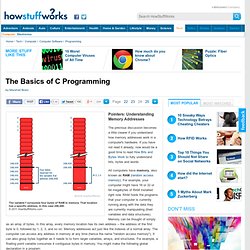
If you have not read it already, now would be a good time to read How Bits and Bytes Work to fully understand bits, bytes and words. All computers have memory, also known as RAM (random access memory). For example, your computer might have 16 or 32 or 64 megabytes of RAM installed right now. RAM holds the programs that your computer is currently running along with the data they are currently manipulating (their variables and data structures). Memory can be thought of simply as an array of bytes. Float f; C programming.com - Learn C and C++ Programming. The Nicest Place on the Internet. BitTorrent So Simple - Official Website.
RetroShare. The Story of Linux: Commemorating 20 Years of the Linux Operating System Video. The Linux Foundation. Java Forums at the Big Moose Saloon. Daily Ubuntu News. Be Polite. Be Helpful. Linphone, an open-source video sip phone. Linux: Install a million games in one click! Wink - [Homepage] Here is a sample Flash tutorial created by Wink.
![Wink - [Homepage]](http://cdn.pearltrees.com/s/pic/th/wink-homepage-208794081)
Click the green arrow button to start viewing it. Subtitle Editor. The Linux Alternative Project. 10 Best Security Software Tools for Linux. That you should check out. 1.
John the Ripper 2. Nmap Nmap is my favorite network security scanner. Gramps. 30+ Awesome Free and Open Source Audio Applications List. Open Source community has great Audio Applications.
We had featured 20 Audio Editors. Here is a best of the Audio Applications list that has, Audio Editors, Audio Sequencers, Stream Rippers, CD Rippers and much more. This list is constantly updated and comments, additions are most welcome. Thanks for commenting and helping us to grow the list. Also check out similar posts; Amarok – Rediscover music. Top 10 Apps that Boosts Ubuntu’s User Experience. 1) Ubuntu Tweak Ubuntu Tweak allows changing all the itsy-bitsy pieces of Ubuntu desktop OS.
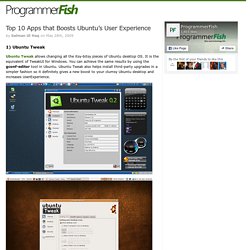
It is the equivalent of TweakUI for Windows. 10 Most Awesome Linux Applications. I know, I know. Not another blog post that lists the “top 10 something or other”. But bear with me. I’ve been thinking a lot lately about what makes a given application awesome. I use a lot of applications every day, many I couldn’t do my job without… but not all of them are awesome. New cool list of Linux must-have programs. Update: A new, up-to-date collection is available. Please take a look! It's been approximately two years since I've written the first article, A (cool) list of Linux tools. The article proved quite popular with my audience, as it allowed Linux users, new converts in particular, a quick taste of some of the more useful programs available for Linux platforms, across a range of categories. Since, a lot has changed. Two years is a long time.
Changes from the last time Like the last time, the programs will be sorted by categories. Games I will not be listing games here. Users' recommendations. AcidRip for Linux Rips DVDs with Two-Click Ease. Top 10 free 3d game download website for linux. Why are you not using LINUX? Because : 17 Essential Linux Resources That You Shouldn’t Miss. Technology, Software, Tips and Tricks, Downloads and a bit of fun A New Morning 17 Essential Linux Resources That You Shouldn’t Miss by Umar on May 25th, 2009 · 11 Comments Linux is one of our favorite topics, have covered some nifty topics on linux in the past.
Today, we are covering a Wide Collection of Linux Apps which include Image Viewers, Video Editors, News Aggregators, Backup Tools & Guides etc. Recently added free & paid , open & close source, Linux games on Penguspy. Conduit. Conduit is a synchronization application for GNOME. Should You Use Open Office? - Snakebytez. 17 Best Conky Configs for Linux Desktops. 13 Breathtaking Conky Configurations You Should See! Enabling Compiz Fusion On Linux Mint 11. Ubuntu Themes: 50 Best Looking Linux Gnome Themes to Download. I recently installed new version of linux (Ubuntu Intrepid ibex) on my secondary computer and i wanted to customize it like i am used to customize windows. I tried a lot of gnome themes and found many beautiful and elegant looking themes which enhance your desktop with different colors, corners, buttons and scroll bar styles.
I filtered some of the best looking gnome themes to share on TechieSouls. 15 Beautiful Ubuntu GDM Themes. Try This Great Looking Conky Lua Configuration For Ubuntu, Fedora Or Linux Mint. Despot77 posted a great looking Conky Lua configuration at Gnome-Look that displays some beautiful rings for the cpu, clock, ram, swap, disk, net and also comes with an easy way to display the weather that doesn't involve you register to any website, work with API keys and so on. Another thing I like about this configuration is that it comes with various color themes and distribution logos: Fedora, Linux Mint and Ubuntu (update: the package also provides Debian and openSUSE configurations). Here is a screenshot of my desktop - setting it up took under one minute so don't get scared about the instructions below, it's actually quite easy: To set it up (obviously, you must install conky first), download the archive from Gnome Look, extract it and: 1.
Linux Newbie Guide: Shortcuts And Commands. Top things to do after installing Ubuntu Linux 9.10 Karmic Koala. How to backup Hard Disk/ Partition/ CD-ROM on Linux using dd command - Chankey Pathak's blog. 13 Of the Best Linux Tutorials and OpenCourseWare on the Web. Learn which online sites offer free Linux tutorials and courses. Find these websites ranked below based on the institution's ranking and the amount of material covered for new and advanced Linux users. #1. Cornell University. How to Create a Wallpaper Slideshow in Ubuntu. Just like Windows 7 and OS X, Ubuntu has the ability to create a slideshow wallpaper thanks to GNOME 2.28.
7 Tasks You Shouldn’t Use a GUI For. Sometimes the GUI is just too slow. Learn how to resize images, add drop shadows, splice mp3s, clone hard drives and more with the command line. Here are a few tasks that you might want to consider using the command line for. 1. Resizing images Unless you are doing some sort of cropping there is no reason to load up Photoshop or the Gimp. Convert -resize 300 image.jpg image-small.jpg. 10 things you must teach new Linux users. GIMP Tutorials and Tips. Removing an object on a photo with GIMP. How to Install Ubuntu Linux on a USB Flash Drive. Wifi Radar For Linux to Manage and Detect Wireless connections. O'Reilly School of Technology. 8 Useful and Interesting Bash Prompts. Scripting, Part Two: Looping for Fun and Profit. HackNotesLinux and Unix Security Portable Reference - Linux Central the /root for Linux resources.
Free Computer Science , SharePoint Tutorials, and Management Tutorials - Laynetworks.com. The Linux Documentation Project. Ubuntu for human beings. Labs. Core Linux - Free Computer, Programming, Engineering, Mathematics, Technical Books, Lecture Notes and Tutorials. All the Best Linux Cheat Sheets. Linux Directory Structure (File System Structure) Explained with Examples. Welcome to Linux From Scratch! Unix, Linux and BSD Guides - How can I create a background image for Grub?
Linux Man Pages. Linux: What are some time-saving tips that every Linux user should know. GitHub - Social Coding. Homepage. BackTrack Linux - Penetration Testing Distribution.
Pinguy OS. Zentyal - The Linux Small Business Server. Operating Systems and Airlines. 10 Reasons to Switch to Linux in 2012.