
The Weight of the Nation: Films: Consequences. Obesity is a very serious medical condition, no longer viewed as strictly an issue of cosmetics.

It’s a contributing factor in the death and disability of too many of our neighbors, friends and family members, and its societal costs are astronomical. Although overall obesity prevalence rates appear to be leveling off, there are still far too many Americans who are overweight or obese - approximately one-third of adults are obese and another third are overweight. Besides facing an increased risk of premature death, people who are obese are at greater risk of serious medical conditions that can make them very sick, potentially subjecting them to constant pain and suffering and diminished quality of life.
Obesity not only drives up health care costs for patients and families, it costs businesses - and the country - tens of billions of dollars in lost productivity and higher employee health costs. Watch Now. Des agriculteurs chinois en révolte contre la «malbouffe» «La Chine a connu des avancées incroyables mais nous en payons le prix en termes de santé.

Nous perdons nos savoirs traditionnels dans l'agriculture et l'alimentation», a déploré Zhou Jinzhang auprès de l'AFP à l'occasion du Salon du goût de Turin, organisé par l'association écolo-gastronomique Slow Food. Dans la cité industrielle de Liuzhou, au milieu de gratte-ciels et des rues trépidantes, Jinzhang a fondé en 2004 une association à but non lucratif, «L'ami des agriculteurs», dont l'objectif est de protéger les mets, recettes et ingrédients traditionnels. «C'est une question de vitesse et de facilité: avec tous les produits chimiques dans l'agriculture et les additifs dans la nourriture comme le glutamate, beaucoup de plats ont perdu de leur saveur», observe Jinzhang, qui est d'abord entré en résistance en créant un réseau d'agriculteurs conscients des problèmes d'environnement.
Fake meat: is science fiction on the verge of becoming fact? As mission statements go, it takes some beating.

Scrawled on a whiteboard are the words: "We will change how the Earth looks from space! " It surpasses "Don't be evil" (the motto of Google, just down the road), and in terms of hubris it trumps even that of Facebook (also just round the corner): "Move fast and break things! " In this anonymous laboratory on a low-rise industrial estate in Menlo Park, 40km south of San Francisco, there is a whiff of revolution in the air. There is a whiff of madness, too, but after a few hours in the company of the man leading this intriguing Silicon Valley startup, one begins to wonder if it is the rest of the world that is insane. Professor Patrick Brown could easily be taken for a deranged visionary. The fake meat business has been around for decades, of course, but it has never really taken off. 'I have zero interest in making a new food for vegans,’ says molecular biologist Patrick Brown.
This is bad news for the Earth. "What are we going to call it? Des centaines de millions de cuisinières en péril. Trois milliards de personnes, soit 40 % de la population mondiale, cuisinent sur un simple feu de bois, de charbon, de détritus ou d'excréments.
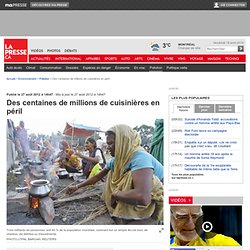
Maintenant en équilibre une marmite sur un feu, dans des fumées parfois toxiques, elles mettent leur propre vie en danger et celles de leurs enfants. Un programme soutenu par les Nations unies et les États-Unis, l'« Alliance mondiale pour des cuisinières propres » (cleancookstoves.org), se donne pour objectif de fournir quelque 100 millions de plaques de cuisson dans le monde d'ici à 2020. Welcome to FFHI — Foods For Health Institute. Mark Bittman: What's wrong with what we eat.
How to Make a Healthy Diet More Affordable. Eating a healthier diet, like the one recommended by the U.S. government, is no easy undertaking — not least because of its high cost.

A new study published on Thursday in the journal Health Affairs calculates that it would cost the average American an extra $380 in fruits and vegetables per year to meet the government’s recommendation for potassium intake alone. Healthy foods are expensive. Conversely, the unhealthier your diet gets, the less it costs. The study found that for each 1% increase in calories from saturated fat, food costs decline by 28¢; for each 1% increase in calories from added sugar, the savings equal 7¢. (MORE: Study: Paying Cash, Not Credit, Leads to Healthier Food Choices) Not only are fresh, whole foods costly, but there isn’t enough of them to go around.
The current system has proved to be remarkably effective in the provision of calories, but not as good at supplying nutrients. (LIST: The ‘Other’ Salt: 5 Foods Rich in Potassium) 1. 2. 3. 4.