
Curiosity & Rigor. Flipped Classroom and Online Learning. Free Project Based Learning Resources from Edutopia. Edutopia, the George Lucas Educational Foundation, is an excellent resource for educators.
Their site has a huge variety of resources, tips, and research on education and is accessible for free. They are a big proponent of Project Based Learning (PBL) and also have a lot of resources on best practices in education. Resources include lists of reading materials on PBL, links to schools that are using PBL, Resources from Edutopia on PBL, Resources from Maine on PBL including examples of PBL, lesson plans, assessments for PBL, planning guides for teachers and schools, professional development resources, resources for parents, and links to organizations and other resources on PBL.
(Resources are in PDF form). This is an excellent collection of resources about PBL and how to implement it in your school and classroom. Related: Free Classroom Guides and Downloads for 2011 from Edutopia More free classroom guides for educators from Edutopia. Project Based Learning. (image from education-world.com) Project Based Learning (PBL) is a great way to teach students content, 21st century skills, and engage them in something fun and educational.
I spoke more about PBL in an earlier blog ( and we had some great reader comments (Tech&Learning, May 2009, page 14). Today I'd like to give some tips and ideas on how to get started with PBL in your classroom. First of all, PBL can be used in any classroom, in any subject, at any grade level. Projects can be one class period, or take weeks to complete. PBL does take planning. For instance, I teach physics and developed a project for my classes on structures and stress and strain. Another example of PBL is having the students research a topic and present it to the rest of the class through a multimedia presentation, website, or poster.
Start small. Another idea for projects is to look at your school or community and see what they need. Some web resources to get you started: A Step-by-Step Guide to the Best Projects. Manor New Technology High School in Manor, Texas, is a 100 percent project-based learning school.
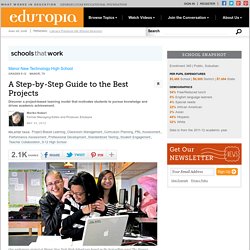
They are part of the New Tech Network of schools and their approach has yielded remarkable results, including a 98 percent graduation rate, with all of their graduates accepted to college. The success of their PBL approach is largely attributable to the fact that their process is designed to stimulate student inquiry. Additionally, their process can be applied to any project in any subject, which means there is a consistent approach across grades and subjects at Manor. We followed a sophomore world studies class through a three-week project called Controlling Factors, created by teaching partners Mary Mobley (English) and Michael Chambers (world history). They designed a project that capitalized on the wild popularity among their students of the best-selling novel The Hunger Games. Problem based learning. Project Based Failing: The Goal is NOT Student-Centered. Over the past five years, I have spent a great deal of time shifting 20% of my class from being teacher-centered to student-centered.

That was a fail. I’ve written a fair amount about the 20% Project and why I believed that it was important to have class time when the teacher is off center stage while shifting emphasis on the students. This model energized and liberated many of my students, while it confused and terrified others. Either way, I was committed to establishing a project where students can take on challenges and solve problems any way they saw fit. As a result, my students are currently wrapping up some amazing projects. The problem, though, is that a 20% Project should NOT be a student-centered project. However human-centered is a specific term that comes from the design-thinking framework that Molly Wilson introduced to our entire school last week.
Next year during the 20% Project, I would like to see empathy be a more structured component of the project. How to Make Your Classroom a Thinking Space. Editor's note: The following is an excerpt from Thinking Through Project-Based Learning: Guiding Deeper Inquiry by Jane Krauss and Suzie Boss.

It was published this month by Corwin. Take a moment and imagine a creative work environment. Don't worry about the kind of work going on. Just focus on the space. Close your eyes and picture it. Was your mental picture anything like either of the workspaces shown in these photos? Photo of High Tech High in San Diego. Rubric. Learning Theory - What are the established learning theories? What's the Difference Between "Doing Projects" and "Project Based Learning"? Project Based Failing: The Goal is NOT Student-Centered.
Project-Based Learning. Project/Problem Based Learning. What is a MOOC? PBL. Project-Based Learning. Read About.