
Design. Learning to Love Humans: Emotional Interface Design. Lean UX: Getting Out of the Deliverables Business (London IA - Feb 7 2012) Shared Note Taking - Webstock 2012. Designing better user interfaces. Fact vs. Fiction: What Usability is Not. A close friend asked me a few days ago – “You’ve covered decent ground on the science, dimensions, characteristics, design aspects, process and pervasiveness of usability considerations.

How about doing a reverse bit? What usability is not about? Or the myths of usability?” I jumped at the chance. In choosing to write this, I am simply reinforcing the simple concept that it is also necessary to talk about the “NOT” part in a subject as complex as usability. Sensemaking in a changing world. Passive magic, design of delightful experience. Why is Google Maps on a mobile device so amazing and delightful?
Why does Word Lens feel so mind-blowing? Why does a Prius feel so good when you get in and go? Why does it feel satisfying to look down at the lighted keyboard on the Mac? Redefining Hick's Law. Advertisement Hick’s Law has always been a popular reference point for designers.

You’ll find it cited in the endless lists of basic laws and principles that all designers should be familiar with. Given our assumed comfort level with this design cornerstone, I am surprised to see so many people getting it wrong. Getting stakeholder buy-in for (Lean) UX: An interview with Janice Fraser of Luxr - We Love Lean.
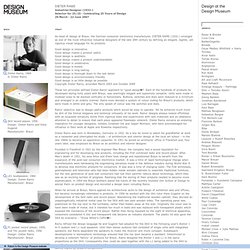
Dieter Rams / Selector for 25/25 - Celebrating 25 Years of Design. Dieter Rams Industrial Designer (1932-) Selector for 25/25 - Celebrating 25 Years of Design 29 March - 22 June 2007 As head of design at Braun, the German consumer electronics manufacturer, DIETER RAMS (1932-) emerged as one of the most influential industrial designers of the late 20th century by defining an elegant, legible, yet rigorous visual language for its products.
Why We Need Storytellers at the Heart of Product Development. There's an interesting question on Quora right now: If you had to pick between an amazing product designer or an amazing engineer to build a new company around, which would you pick and why?
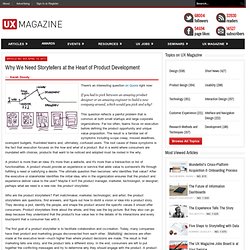
This question reflects a painful problem that is common at both small startups and large corporate organizations. Far too often, teams focus on execution before defining the product opportunity and unique value proposition. The result is a familiar set of symptoms including scope creep, missed deadlines, overspent budgets, frustrated teams and, ultimately, confused users. The root cause of these symptoms is the fact that execution focuses on the how and what of a product. GmbH · Blog · The number seven is not magical, but cognitive capacity limitations are real and relevant (Part 2) GmbH · Blog · The number seven is not magical, but cognitive capacity limitations are real and relevant (Part 1)
Five Indispensable Skills for UX Mastery. By Jared M.
Spool Originally published: Aug 03, 2010 For practicing User Experience Designers, one of the most important laws isn't Fitts's Law, which helps us understand how to design interactive elements. Nor is it Hick's Law, which describes how long people take to make decisions. It's Sturgeon's Law, which tells us that 99% of everything is crap. Yet if we want to be really excellent at what we do, what are those essential skills? This is exactly the question we set out to answer as we studied the work of the master UX professional. Indispensable Skill #1: Sketching Someone once said that talking about design is like performing interpretive dance about architecture. A quick sketch about a design—what it will look like, how information flows from one place to another, how the users move between activities—often is the best way to get our ideas across.
The masters we talked to gravitate to sketching easily. We're talking back-of-the-napkin quality stuff. Memory Inception: Three Keys To Creating A Great User Experience For Your Product. Editor’s note: This guest post is written by Dmitry Dragilev, the lead marketer at ZURB, an interaction design firm whose clients have included Facebook, eBay, Yahoo, NYSE, Britney Spears, and Zazzle.

They are also behind the Web notation products Notable and Bounce. The Dirtiest Word in UX: Complexity. It’s hard to read anything about UX without finding a reference to the constant tension between simplicity and complexity.

People have strong preconceived notions about the words, especially when it comes to experience design. You don’t have to be a UX practitioner to understand that simplicity is a good thing; no one goes around the office saying, "Alright team, let’s make this application really, really complex! " Removing that layer of confusion to make the user's goals easy to achieve means making things simple and clear. However, removing confusion doesn't always mean removing complexity—it’s somewhat of a grey area. Sometimes complexity actually isn’t such a bad thing. Is Simplicity Overrated? Although most people would say they seek simplicity in life and products, our actions say something different. In some cultures complex products are more appealing than products that appear simple.