
Articles Title Detail. These days, Fidel Castro’s main link with the outside world comes through his occasional blogs.

Recently he has given his opinion about North Korea and the ‘greatest threat of nuclear war in 50 years’. Since finally handing over power to his younger (81? -year old) brother Raúl in 2008, the veteran Cuban leader seems to have largely respected his position, and made few attempts to intervene either in the day-to-day running of Cuba or in the reform measures that are being grudgingly adopted by the regime. So now the man who ruled Cuba’s destiny for almost half a century has returned to journalism, a profession that has always fascinated him. When he was fighting the Batista dictatorship in 1957 in the Sierra Maestra mountains, he was well aware of the propaganda value of the interviews he gave with a reporter from the New York Times.
I arrived just as those attempts were running into one of their stiffest challenges. This was precisely the kind of situation that Fidel Castro most enjoyed. William Alexander Morgan in the Cuban Revolution. For a moment, he was obscured by the Havana night.
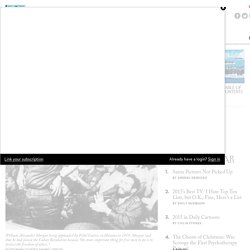
It was as if he were invisible, as he had been before coming to Cuba, in the midst of revolution. Then a burst of floodlights illuminated him: William Alexander Morgan, the great Yankee comandante. He was standing, with his back against a bullet-pocked wall, in an empty moat surrounding La Cabaña—an eighteenth-century stone fortress, on a cliff overlooking Havana Harbor, that had been converted into a prison.
Flecks of blood were drying on the patch of ground where Morgan’s friend had been shot, moments earlier. Morgan, who was thirty-two, blinked into the lights. The gunmen gazed at the man they had been ordered to kill. It was March 11, 1961, two years after Morgan had helped to overthrow the dictator Fulgencio Batista, bringing Castro to power. After the revolution, Morgan’s role in Cuba aroused even greater fascination, as the island became enmeshed in the larger battle of the Cold War. The rebels regarded Morgan uncertainly.
J. Alexander McGregor: Cuban Machismo. Isla 70, Raúl Martínez, 1970 by Alexander McGregor As long as nothing happens anything is possible. – Graham Greene With this beautifully modest sentence Greene excavated one of the most essential and enduring myths of the Cuban Revolution.

Following the sheer, inviolable force of gravity that brought Fidel Castro to power in 1959, so much freedom was promised to the people, who in turn expected so much liberty, and yet the revolutionary soil proved infertile. In the construction of a genuinely socialist state, shaped upon Bolivarian principles, arguably little has been achieved in the last fifty years and the regime, apparently, withstands the inevitable decay of popular support through both repression and an almost mystical, religious prosecution of the ‘eternal possibility’: keep fighting, oh sons of Cuba, one day we shall be finally rid of our enemies and then we may be truly free. Here though, lies one of the key distinctions between the Russian Revolution and its Cuban counterpart. Cuban missile crisis: how the US played Russian roulette with nuclear war. The world stood still 50 years ago during the last week of October, from the moment when it learned that the Soviet Union had placed nuclear-armed missiles in Cuba until the crisis was officially ended – though, unknown to the public, only officially.

The image of the world standing still is due to Sheldon Stern, former historian at the John F Kennedy Presidential Library, who published the authoritative version of the tapes of the ExComm meetings where Kennedy, and a close circle of advisers, debated how to respond to the crisis. The meetings were secretly recorded by the president, which might bear on the fact that his stand throughout the recorded sessions is relatively temperate, as compared to other participants who were unaware that they were speaking to history. Stern has just published an accessible and accurate review of this critically important documentary record, finally declassified in the 1990s.
I will keep to that here. There was good reason for the global concern.