
Jennifer Risko
Kennedy-Nixon Debate 1/4 (1960)
The Great War. Unit 8: Progressivism. The Week in Rap. Political Cartoons Illustrating Progressivism and the Election of 1912. Background.
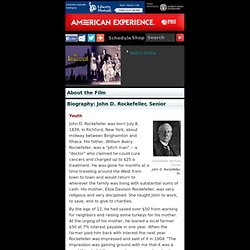
American Experience. Youth Rockefeller Archive Center John D.
John D. Rockefeller. Political Cartoons in U.S. History - Primary Source Set - For Teachers. THE WEST - The Dawes Act (1887) The Dawes Act February 8, 1887 (U.

S. Statutes at Large, Vol. XXIV, p. 388 ff.) [Congressman Henry Dawes, author of the act, once expressed his faith in the civilizing power of private property with the claim that to be civilized was to "wear civilized clothes...cultivate the ground, live in houses, ride in Studebaker wagons, send children to school, drink whiskey [and] own property. "] Lexrachel2 - Plessy vs. Ferguson. Original Civil War photographs. Teaching the Civil War with Technology. Ideas for teaching the Civil War. America's Reconstruction: People and Politics After the Civil War. The Battle Over Reconstruction. Primary Source Sets - For Teachers. Teachers Abraham Lincoln: Rise to National Prominence Speeches, correspondence, campaign materials and a map documenting the free and slave states in 1856 chronicle Lincoln’s rise to national prominence Alexander Hamilton Manuscripts, images, and historic newspapers document the life and accomplishments of Alexander Hamilton American Authors in the Nineteenth Century: Whitman, Dickinson, Longfellow, Stowe, and Poe A selection of Library of Congress primary sources exploring the topic of American authors in the nineteenth century, including Walt Whitman, Emily Dickinson, Henry Wadsworth Longfellow, Harriet Beecher Stowe, and Edgar Allan Poe.
Top. Andrew Jackson’s Message to Congress Concerning the Indian Removal Act of 1830: A Common Core Unit. Westward Expansion and Regional Differences < History 1994. Constitution Day. Constitution Day: An Opportunity for Empowering Students to Think Critically. Chip Somodevilla/Getty ImagesLaird Monahan walking up the steps of the Lincoln Memorial past a giant banner printed with the Preamble to the United States Constitution during a demonstration against the Supreme Court’s Citizens United ruling on Oct. 20, 2010.Go to related 2010 blog post » Sept. 17 is Constitution Day, the day when the writers at the Constitutional Convention in Philadelphia signed the United States Constitution in 1787.

Dust is far from gathering on this 225-year-old document, however (not least because it is preserved in the highly protected, temperature-regulated National Archives case): The Constitution influences our lives, schools and government every single day. Each school day is an opportunity to make the Constitution relevant in your classroom by empowering students to research big questions, think critically, defend their arguments with evidence and speak their opinions with the protections that the Constitution entitles us. 1. 2.
Into the Future: Social Media Info Elevates Big Data Predictions. Your tweets do have meaning.

To your family and friends, of course and maybe to some colleagues. But we are referring to a bigger meaning for your online musings, in the bundled and aggregated sense. Sophisticated investors and some government agencies are increasingly analyzing social media data to enhance their own statistical predictive capabilities. They are searching for patterns, trends and anomalies that may provide knowledge about the direction of various markets; for securities, for products, for services, for political outcomes and any other knowledge from which advantage can be derived.
Tweets, Facebook likes and shared articles are among the clues. Downsides do exist. Skepticism about the worth of bundled tweets or likes is already abundant. Ariana Cha reports in the Washington Post: How The Simpsons Disproves Everything I Believe About Economics. EconomyWeb. Civics Documents. Electing a President - An Interactive Graphic.
Social Studies - History - American History. Usnationalarchives's Channel. S Guide (9-12): Historical Documents. Industrial Revolution Lesson Plans for 8th Grade American History. NORTHERN CLOTH MANUFACTURER - You are a manufacturer of cloth in America.

Before Congress passes the tariff of 1828, you almost went out of business. The British cloth manufacturers were selling their cloth so cheaply in the USA that you could not compete with them. American clothing makers were buying their cloth because it was cheaper and of better quality. You wrote a letter to your congressman. You argued that the English were selling so cheap just so they could cause you and other American cloth weavers to go out of business. SOUTH CAROLINA PLANTER - You are a cotton plantation owner in South Carolina. JOHN C. ANDREW JACKSON - As President, you understand the point of view of Southerners who are strongly opposed to the tariff.
DANIEL WEBSTER - One of the nation's great speakers, you are a senator from Massachusetts. HENRY CLAY - Your nickname is "The Great Compromiser. " ROBERT Y. Image Credit. Teacher Guide To The Industrial Revolution - Lesson Plans, Worksheets. Teacher Guide to the Industrial Revolution Before the Industrial Revolution, manual labor was the basis of most production and by necessity the scale of production was small.

This tended to keep the supply amounts small and so the market reach was also limited. Even when this progressed to the use of animal-powered vehicles, there was not a significant improvement in scale of production.