
Students Push Their Facebook Use Further Into Academics - Wired Campus. College students are taking social media to a new level, using Web sites like Facebook to communicate with other students about their coursework, according to results of a new survey on student technology use.

Nine out of 10 college students say they use Facebook for social purposes, like writing status updates and posting pictures. And the majority, 58 percent, say they feel comfortable using it to connect with other students to discuss homework assignments and exams. One out of four students even went so far as to say they think Facebook is “valuable” or “extremely valuable” to their academic success. The survey was conducted in June by the Educause Center for Applied Research, and was taken by 3,000 students from more than 1,000 colleges. The results show how technology is shaping students’ lives both inside and outside the classroom. Kevin Roberts, chief information officer of Abilene Christian University, says technology is merging the academic and social aspects of students’ lives. Research on Social Network Sites. Seeing Eye to Eye: Predicting Teacher–Student Agreement on Classroom Social Networks - Neal - 2010 - Social Development.
Facebook for educators. Social media in the classroom ~ sites and articles. 100 Tips, Tools, and Resources for Teaching Students About Social Media. By Tara Miller Some educators have expressed an appreciation for the irony of experienced instructors who have had to learn about social media later in their careers teaching it to younger students who have grown up in an Internet environment.
Despite what may seem to be somewhat of a disadvantage, the experienced teacher brings life lessons and the ability to guide students in a positive direction no matter the topic being taught. The following tips, tools, and resources can assist any teacher with the basics about social media and ways to share that information with students. Tips and Resources for Educators From tips on combating fear of social media to tools and articles to help guide you, these resources will get you off to a good start. Social Media Classroom. Networking Help students learn about networking with these tips and resources. Networking. Creating a Positive Web Presence Keep Your E-Image Clean. Blogging Blogging in the Classroom. Social Networking Sites Student.com. Twitter. Education Database Online : Colleges, Universities, Schools, Courses, & Degrees. Growing Up Digital, Wired for Distraction. Jim Wilson/The New York Times Students have always faced distractions and time-wasters.
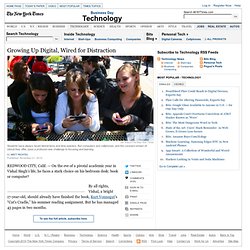
But computers and cellphones, and the constant stream of stimuli they offer, pose a profound new challenge to focusing and learning. By all rights, Vishal, a bright 17-year-old, should already have finished the book, ’s “Cat’s Cradle,” his summer reading assignment. But he has managed 43 pages in two months. He typically favors , and making digital videos. On YouTube, “you can get a whole story in six minutes,” he explains. Researchers say the lure of these technologies, while it affects adults too, is particularly powerful for young people.
“Their brains are rewarded not for staying on task but for jumping to the next thing,” said Michael Rich, an associate professor at Harvard Medical School and executive director of the Center on Media and Child Health in Boston. “I am trying to take back their attention from their BlackBerrys and video games,” he says. Infographic: Is Social Media Ruining Students? - Nicholas Jackson - Technology. Education Database Online Blog. Is Apple Still a Game Changer in Education?

The words "Apple" and "innovation" often go hand in hand, but the tech giant has been less dominant in education than it has been in other areas. While the iPad has continued to change the way many classrooms function, Apple's once-leading online education platform, iTunes U, is now left out of most discussions about online learning and OpenCourseWare. In the 1970s, when mainframe computers had a monopoly on academic research, Apple started donating Apple 1 computers to schools. This allowed more students than ever to use computers and led to the rise of computer instruction and technological developments in education. Today, though, the field is so varied that Apple has had a harder time making the waves in education it once did. Apple's Bright Spots One of the biggest things to come out of Apple in the last few years is the iPad. Students can download apps for each class, create presentations, and access information from anywhere.
Staying Alive. Free Book Writing Software: self-publish and sell your book or ebook with just a few clicks. - FastPencil. Learningweb2 - Table of tools for blogs or wikis. Sync.in.