
Biostatistics and Risk Assessment Center, Department of Epidemio. Center on Aging. As the cost of long-term care continues to rise, policymakers and others are seeking new ways to control costs while maintaining or increasing customer satisfaction.
Currently, there is increasing interest among the aging and disability communities in models of consumer-directed health care. Among them is "cash and counseling," in which cash allowances, coupled with information services, are paid directly to disabled persons allowing them to arrange and purchase the services they feel best meet their needs. Department of Kinesiology at University of Maryland : Cognitive. The Cognitive Motor Neuroscience Laboratory, composed of 9 faculty members, post-docs, and graduate students, focuses on behavioral, neural, mechanical, and higher-level mechanisms underlying the selection, planning, learning, initiation, and execution of movement.
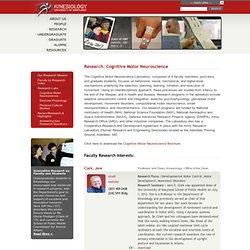
Using an interdisciplinary approach, these processes are studied from infancy to the end of the lifespan, and in health and disease. Research programs in the laboratory include adaptive sensorimotor control and integration, exercise psychophysiology, perceptual motor development, movement disorders, computational motor neuroscience, smart neuroprosthetics, and neuromechanics. Our research programs are funded by National Institute(s) of Health (NIH), National Science Foundation (NSF), National Aeronautics and Space Administration (NASA), Defense Advanced Research Projects Agency (DARPA), Army Research Office (ARO), and other industrial companies. Click here to download the Cognitive Motor Neuroscience Brochure. Cultural Competency in Health Care - University of Maryland Coll. Welcome to the University of Maryland College Park-School of Public Health's website on cultural competency and health disparities.
Department of Kinesiology at University of Maryland : Exercise P. Our faculty research interests cover a broad range of areas, from exercise epidemiology to genetic and molecular aspects of aging and exercise physiology.

A number of our faculty are incorporating cutting-edge genetic, molecular, and cellular techniques into their studies of skeletal muscle, cardiovascular physiology, and metabolism. Graduate teaching assistantships, research assistantships, and fellowships are available for outstanding students, including an NIH/NIA-funded Institutional Predoctoral Training Grant (T32). We are looking for excellent and highly motivated graduate students to apply to our program and join our research teams. Our admission requirements are at least a 3.0 GPA, strong GRE scores, and excellent recommendations. Click here to download the Exercise Physiology Brochure. The Exercise Physiology Laboratory is comprised of several laboratories:
Department of Public and Community Health. Family Policy Impact Seminar. School of Public Health. Department of Health Services Administration Recharge your life and pursue your passion with OLLI UMD where you learn more and pay less.
OLLI UMD offers a wide variety of lifelong learning opportunities to meet the needs and interests of its diverse membership of adults age 50 and over. Department of Kinesiology at University of Maryland : Physical C. Physical Cultural Studies: Program Description Physical Cultural Studies (PCS) advances the critical and theoretical analysis of physical culture, in all its myriad forms.
These include sport, exercise, health, dance, and movement related practices, which PCS research locates and analyzes within the broader social, political, economic, and technological contexts in which they are situated. More specifically, PCS is dedicated to the contextually based understanding of the corporeal practices, discourses, and subjectivities through which active bodies become organized, represented, and experienced in relation to the operations of social power. PCS identifies the role played by physical culture in reproducing, and sometimes challenging, particular class, ethnic, gender, ability, generational, national, racial, and/or sexual norms and differences. Physical Cultural Studies: Program Purpose. Public Health Informatics (PHI) School of Public Health. Welcome to the Public Health Science program offered by the University of Maryland, College Park at the convenient campus at Universities at Shady Grove (USG)!
Now you can make a seamless transition from community college or another four-year institution to the University of Maryland while staying in Montgomery County. Why Study Public Health? Public health is an exciting and dynamic field which is growing and expanding to meet the needs of a changing, aging, and more complex population. Public health professionals face complex and challenging issues like: How can we help to make the public healthier? How can we help to make the public safer? Public health is a rewarding field which offers professionals the opportunity to make a difference in people's lives. About the Program The Public Health Science program is a science-based bachelor's program for 3rd and 4th year college students who have earned 60 credits.
Courses Contact. UM STAR: Department of Kinesiology.