
Kefir. Kefir Etymology[edit] The word kefir,[3] existing in modern Russian (since at least 1884),[4] Polish and English, is probably from a North Caucasian language (although some sources see a connection to Turkic köpür (foam)[5]) and has become the most commonly used name, although it is known in other regions by various names.
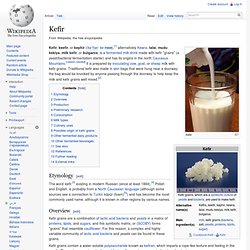
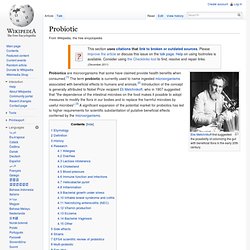
Overview[edit] Kefir grains are a combination of lactic acid bacteria and yeasts in a matrix of proteins, lipids, and sugars, and this symbiotic matrix, or (SCOBY) forms "grains" that resemble cauliflower. For this reason, a complex and highly variable community of lactic acid bacteria and yeasts can be found in these grains. Probiotic. Élie Metchnikoff first suggested the possibility of colonizing the gut with beneficial flora in the early 20th century.
Probiotics are microorganisms that some have claimed provide health benefits when consumed.[1] The term probiotic is currently used to name ingested microorganisms associated with beneficial effects to humans and animals.[2] Introduction of the concept is generally attributed to Nobel Prize recipient Eli Metchnikoff, who in 1907 suggested that "the dependence of the intestinal microbes on the food makes it possible to adopt measures to modify the flora in our bodies and to replace the harmful microbes by useful microbes".[3] A significant expansion of the potential market for probiotics has led to higher requirements for scientific substantiation of putative beneficial effects conferred by the microorganisms.
Etymology[edit] Definition[edit] Probiotics must have undergone controlled evaluation to document health benefits in the target host. Bacopa.