
Using Color Theory to Create a Better Color Palette. We all know how important color is within design.
However, with a lot of the current design trends, creating interesting and cohesive color palettes has become even more essential in producing successful designs. For years, websites typically fell into one of two categories: white backgrounds or color backgrounds. But our digital tastebuds have evolved, and we’ve grown to love the precise and calculated use of color so commonly seen in print design. And this means that as web designers, we need to make sure we understand what it takes to create these impeccable palettes. Color Theory: Pick a Mood for Your Room « Design Shuffle's blog.
127StumbleUpon This awesome infographic was shared with us recently and we couldn’t wait to share the love.
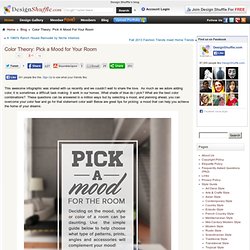
Psychology of Color [Infographic] Perhaps no choice is as vital to marketing as color.
![Psychology of Color [Infographic]](http://cdn.pearltrees.com/s/pic/th/psychology-meaning-behind-55274580)
Whether you are selecting the color for a product or for your email marketing campaign, color has tremendous impact on all of us. Subconsciously, we associate different colors with different things. This infographic examines the psychology of color and looks at some common associations of different colors. It shows the overall importance of color to consumers and characteristics of many individual colors, and it also helps show the connection between graphic design and psychology. The numbers are pretty fascinating! While color can be appealing to us visually, a lot more is going on behind the scenes than just an aesthetic. Embed This Graphic On Your Site. Five Amazing Color Palette Generators. Do you need to pick out a new color scheme, but don't know where to begin?
If you're designing a web site or blog theme, finding just the right color palette is nearly as important as writing good code, but it can be a challenge for those of us who don't have any innate design skills. When looking for inspiration today, it's easy to become overwhelmed with the number of choices available for generating color schemes, but here are five apps we find truly inspiring.
Finding Inspiration When you're looking for color schemes, a quick Google search will lead you to a number of resources - in fact, there are so many it's almost too much. The problem with a lot of the apps you find today is that they are simply tools to provide you with the numbers of the web colors. Kuler. The Ultimate Collection of Free Photoshop Patterns. Photoshop patterns offer a quick way to enhance your project with a cohesive look.
Here are a collection of absolutely beautiful photoshop patterns. Whether you use patterns to fill the entire background of your site or just a specific area of your design, you will definitely find these useful. Download these free Photoshop patterns to make an amazing poster printing design. 70′s Photoshop Pattern “Here’s an old 70′s looking Photoshop Pattern that I made a while back and had no use for so I decided to share it with the community. Download File. Search. #f74f63.
The Color Test. Color Theory 101. 26 Beautiful Handpicked Color Palettes. Color Psychology in Logo Design. COLOUR PSYCHOLOGY IN LOGO DESIGN Our minds are inherently programmed to respond to colour.
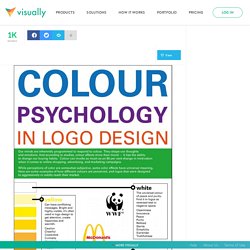
They shape our thoughts and emotions. And according to studies, colour affects more than mood — it has the ability to change our buying habits. Colour can invoke as much as an 80 per cent change in motivation when it comes to online shopping, advertising, and marketing campaigns. While perceptions of color are somewhat subjective, some color effects have universal meaning. Here are some examples of how different colours are perceived, and logos that were designed to aggressively or subtly reach their market. ->white The universal colour of peace and purity. Cleanliness Innocence Peace Purity Refined Sterile Simplicity Surrender Truthfulness ->yellow Can have conflicting messages Bright and highly visible, it’s often used in logo design to get attention, create happiness and warmth.
Caution Cheerful Cowardice Curiosity Happiness Joy Playful Positivity Sunshine Warmth. Search. #d9e8c3 #ced181.
Chartreuse (color) Chartreuse (traditional) (Chartreuse Yellow) (#DFFF00) Chartreuse (web) (Chartreuse Green) (#7FFF00) The French word chartreuse means "charter house".
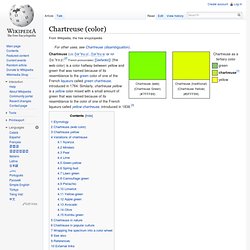
The monasteries that the monks of the Carthusian order (who started producing Chartreuse liqueur in 1764) live in, the first one of which was established in 1082 by Saint Bruno, are called charter houses because they were chartered—and given generous material support—by the Duke of Burgundy known as Philip the Bold when he took over the area in 1378. Philip the Bold's elaborately decorated tomb was initially installed at a Carthusian charter house when he died in 1404.[4] At right is displayed the web color chartreuse.
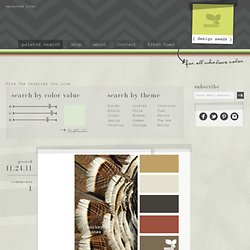
Search. #ededed #e8dcca #b08a61. 30 Aesthetically Beautiful Vintage Textures for your Designs. If you are a designer who is working on design projects such as banners or sketch of a website which require vintage touches, the use of design elements that look like they were found in the attic of an old house dating back to the 1920′s, 30′s, or 40′s or vintage looking textures is important to give your design a feeling of authenticity and originality.
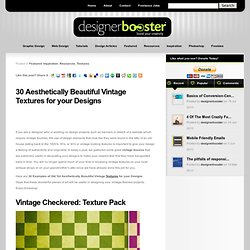
In today’s post, we gathered some great vintage texures that are extremely useful in decorating your designs to make your viewers feel that they have transported back in time. You will no longer spend much of your time in browsing vintage textures on your local antique shops or on your grandmother’s attic since we have already done this job for you. Here are 30 Examples of Old Yet Aesthetically Beautiful Vintage Textures for your Designs. Hope that these wonderful pieces of art will be useful in designing your vintage-themed projects.
Enjoy browsing! 0to255. RGB-to-Hex Color Converter. RGB-to-Hex Conversion Question: How do I convert RGB values of a color to a hexadecimal string?
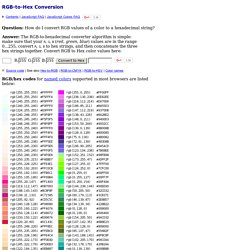
Answer: The RGB-to-hexadecimal converter algorithm is simple: make sure that your values are in the range 0...255, convert R, G, B to hex strings, and then concatenate the three hex strings together. Convert RGB to Hex color values here: function rgbToHex(R,G,B) {return toHex(R)+toHex(G)+toHex(B)} function toHex(n) { n = parseInt(n,10); if (isNaN(n)) return "00"; n = Math.max(0,Math.min(n,255)); return "0123456789ABCDEF".charAt((n-n%16)/16) + "0123456789ABCDEF".charAt(n%16); } Notes: The script parses the input R, G, B values as integers using the standard function parseInt(string,10); the second, optional argument 10 specifies that the value must be parsed as a decimal number.
Color Hex - ColorHexa.com. L-O-V-E Makes The World Go W-E-I-R-D (11 Photos) Color Scheme Designer 3. Beyond Pink and Blue: A Look at Gender Colors. It goes beyond culture. There is science behind the gender-relationships when it comes to colors. A study by John Hallock compares the color preferences among various demographics and takes into account information collected from 22 countries.
Our friends at KissMetrics put together this informative infographic that tears down the gender barriers to reveal what really goes on in visualizations. Click any portion to enlarge. Colors by Gender The Color Purple - The most notable gender difference can be seen in the color purple. Blue Reigns Supreme – Both males and females like the color blue, which receives favor with 35% of female respondents and more than half of the male respondents. A Closer Look. Color Theory for Designers, Part 1: The Meaning of Color - Smashing Magazine. Color in design is very subjective. What evokes one reaction in one person may evoke a very different reaction in somone else.
Sometimes this is due to personal preference, and other times due to cultural background. Color theory is a science in itself. Studying how colors affect different people, either individually or as a group, is something some people build their careers on. The Psychology of Color [Infographic] Download the infographic as a PDF Embed this image on your site: Yet Another Colorization Tutorial.