
Wabi-Sabi. Selkirk. Wabi Sabi. Wabi-Sabi: For Artists, Designers, Poets & Philosophers, by Leonard Koren ISBN 1880656124 This page is also referred to for the Wabisabi Wiki Wabi-sabi is the quintessential Japanese aesthetic. It is a beauty of things imperfect, impermanent, and incomplete. It is a beauty of things modest and humble. It is a beauty of things unconventional... It is also two separate words, with related but different meanings. I bought a broken 1997 Geo Metro hatchback, and in the process of repairing it, I got filthy, frustrated, elated, and more knowledgeable than I've ever been.
It is the cracks in the bark of trees that lets us know it is a mature and healthy tree, harboring an ecosystem while protecting itself from many of the denizens of the ecosystem. Seconded. Ring the bells that still can ring Forget your perfect offering There's a crack in everything That's how the light gets in. -- LeonardCohen, "Anthem". WabiSabi reminds me of the first rule of AsciiArt - the bigger the ascii the easier the art. Related:ISBN0981484603. The setting sun - Osamu Dazai, Donald Keene. Wabi-sabi. Wabi-sabi (侘・寂, Wabi-sabi?)

Es un término estético japonés que describe objetos o ambientes caracterizados por su simpleza rústica. El wabi-sabi combina la atención a la composición del minimalismo, con la calidez de los objetos provenientes de la naturaleza. Características[editar] Corriente japonesa estética y de comprensión del mundo basada en la fugacidad e impermanencia. Deriva de la afirmación budista de las Tres Características de la Existencia. Según Leonard Koren, autor del libro Wabi-Sabi: for Artists, Designers, Poets and Philosophers, se refiere a aquella belleza imperfecta, impermanente e incompleta.
El wabi-sabi ocupa la misma posición en la estética japonesa que en Occidente ocupan los ideales griegos de belleza y perfección. Andrew Juniper afirma que: Si un objeto o expresión puede provocar en nosotros una sensación de serena melancolía y anhelo espiritual, entonces dicho objeto puede considerarse wabi-sabi. Richard R. Las palabras wabi y sabi no se traducen fácilmente. Bio. The first 300 words from Wabi-Sabi: for Artists, Designers, Poets & Philosophers “Wabi-sabi is a beauty of things imperfect, impermanent, and incomplete.
It is a beauty of things modest and humble. It is a beauty of things unconventional.” “The immediate catalyst for this book was a widely publicized tea event in Japan. The Japanese aesthetic of wabi-sabi has long been associated with the tea ceremony, and this event promised to be a profound wabi-sabi experience. “Admittedly, the beauty of wabi-sabi is not to everyone’s liking. Undesigning the Bath Gardens of Gravel and Sand 13 Books Arranging Things: A Rhetoric of Object PlacementThe Flower Shop: Charm, Grace, Beauty, Tenderness in a Commercial Context Which "Aesthetics" Do You Mean? Wabi-sabi. A Japanese tea house which reflects the wabi-sabi aesthetic in Kenroku-en (兼六園) Garden Wabi-sabi (侘寂?)
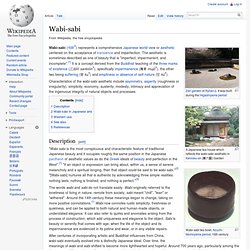
Represents a comprehensive Japanese world view or aesthetic centered on the acceptance of transience and imperfection. The aesthetic is sometimes described as one of beauty that is "imperfect, impermanent, and incomplete".[1] It is a concept derived from the Buddhist teaching of the three marks of existence (三法印, sanbōin?) , specifically impermanence (無常, mujō?)
, the other two being suffering (苦, ku?) Description[edit] "Wabi-sabi is the most conspicuous and characteristic feature of traditional Japanese beauty and it occupies roughly the same position in the Japanese pantheon of aesthetic values as do the Greek ideals of beauty and perfection in the West".[1] "If an object or expression can bring about, within us, a sense of serene melancholy and a spiritual longing, then that object could be said to be wabi-sabi The words wabi and sabi do not translate easily. Western use[edit] Wabi-sabi for artists, designers, poets & philosophers - Leonard Koren.