
How are plastics made? Forty years ago, anything made of plastic was considered "cheap.
" That’s certainly not true today when plastics are used in thousands of products ranging from computers, automobile parts and important medical equipment to toys, cookware, sports equipment, and even clothes. And the plastics industry continues to grow rapidly. Just where do plastics come from? What are plastics? It may surprise students to learn that gutta-percha, shellac, and the horns of animals—all naturally occurring substances—were used as plastic material before the first synthetic plastics were produced. Bioplastic. Bioplastics are plastics derived from renewable biomass sources, such as vegetable fats and oils, corn starch, pea starch[1] or microbiota.[2] Common plastics, such as fossil-fuel plastics, are derived from petroleum; these plastics rely more on fossil fuels and produce more greenhouse gas.

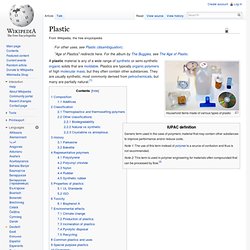
Some, but not all, bioplastics are designed to biodegrade. Biodegradable bioplastics can break down in either anaerobic or aerobic environments, depending on how they are manufactured. Plastic. Household items made of various types of plastic IUPAC definition Generic term used in the case of polymeric material that may contain other substances to improve performance and/or reduce costs.
Note 1: The use of this term instead of polymer is a source of confusion and thus is not recommended.