52 Times Western Art History Was Hella Body Positive (NSFW) Gustav Klimt, "Masturbation," 1916. Rape Scenes Aren't Just Awful. They're Lazy Writing. By now it’s almost a ritual: A movie or TV show—probably Game of Thrones—depicts a woman getting raped, is greeted by furious criticism on the Internet, which slowly dies down until the next rape, when the cycle begins anew. Over the last several decades, rape has evolved from a topic that was neither depicted in pop culture nor talked about publicly, to a frequent, even overused plot point in movies and TV shows. It’s also become the center of a fierce debate about when portraying rape in fiction is unnecessary, manipulative, and even harmful—especially when it feeds into real-life misconceptions about sexual assault that are often used to deprive rape survivors of legitimacy or justice.
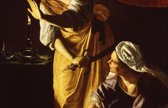
Half the time, people can’t even seem to figure out how to define rape, let alone portray it in responsible ways. From reinforcing falsehoods about sexual violence to the objectification of women, here’s why that rape storyline is probably a bad idea, and a pretty uncreative one too. Rape Is Rape. Judith and Her Maidservant — Artemisia Gentileschi. Rediscovering the Music of the Age of Caravaggio. Caravaggio (Michelangelo Merisi), “The Musicians” (1595), oil on canvas, 36 1/4 x 46 5/8 in. (courtesy Metropolitan Museum of Art) The aural history of the 16th to 17th century resonates through the Metropolitan Museum of Art’s Painting Music in the Age of Caravaggio. Lutes, a plague-surviving violin maker, and songbird charming flutes join three paintings that depict the musical instruments, one by Caravaggio and the others by contemporaries Valentin de Boulogne and Laurent de La Hyre.
Lute, attributed to Wendelin Tieffenbrucker (active 1570–1610), Late 16th century, Padua, Italy. Yew, spruce, ebony, maple (courtesy Metropolitan Museum of Art) (click to enlarge) It’s a modest exhibition, just overtaking a single small room amidst the larger European art galleries. With an in-gallery soundtrack performed on the Met’s lutes, it’s a compact portrait of music at a time of evolution. Installation view of ‘Painting Music in the Age of Caravaggio’ (photograph by the author for Hyperallergic) Women Murdering Men In Western Art History. One of the greatest aspects of ancient Greek civilization was the persistent belief that there was nothing women liked better to do than assemble a gang, air their tits out, and roam the countryside beating men to death.
This was, sadly, a myth, but it did not stop generations of European painters from imagining what savage bands of female murderesses might have looked like. The Venn diagram of “female devotees of Dionysus who savagely tear apart Orpheus” and “parties I would love to attend” has an overlap of roughly 100%. This is a fitting end for a man known for strolling about the ancient world playing unasked-for lyre solos at everyone. Look at how fun these stabbing bitches seem. They’ve already ripped off the entire lower half of Pentheus’ body and they are not calling it a day. True beauty is a severe brow, a no-nonsense haircut, and an armful of male limbs you’re about to rip off someone’s torso. Nobody’s murdering his left leg! [Images mostly via] Italian art historian claims magnificent Caravaggio masterpiece found | Art and design.
One of Italy’s most eminent art historians has claimed to have solved a centuries-old mystery after identifying a previously unknown painting in a private collection as a “magnificent” Caravaggio masterpiece. Mina Gregori, 90, president of the Roberto Longhi foundation of art history studies in Florence and author of several books on the baroque painter, said she was 100% sure she had found the original Mary Magdalene in Ecstasy. “I have become a connoisseur,” she said. “And I know a Caravaggio when I see one.”
A number of elements had combined to give her complete certainty, she said, that the oil on canvas she was presented with this year was the real thing. There are several different versions of the Mary Magdalene in Ecstasy, and until now the one thought most likely by art historians to be the 1606 original was lying in a private collection in Rome.
Gregori, however, believes the game is up for all the pretenders. “The varying flesh tones of the body, the intensity of the face. Bernini: He Had the Touch by Ingrid D. Rowland. Portraits of the Soul an exhibition at the Museo Nacional del Prado, Madrid, November 6, 2014–February 8, 2015 Bernini: Roma y la Monarquía Hispánica [Bernini: Rome and the Spanish Monarchy] Catalog of the Prado exhibition by Delfín Rodríguez Ruiz Madrid: Museo Nacional del Prado, 189 pp., €42.00 (paper) Bernini’s Beloved: A Portrait of Costanza Piccolomini by Sarah McPhee Yale University Press, 260 pp., $50.00 Barocco a Roma: La Meraviglia delle Arti [The Baroque in Rome: The Wonders of Art] an exhibition at the Fondazione Roma Museo, Palazzo Cipolla, Rome, April 1–July 26, 2015 Catalog of the exhibition edited by Maria Grazia Bernardini and Marco Bussagli Milan: Skira, 445 pp., €42.00 (paper) Bernini at Saint Peter’s: The Pilgrimage by Irving Lavin London: Pindar, 374 pp., £195.00 Bernini: Sculpting in Clay by C.D.
Metropolitan Museum of Art/ Yale University Press, 416 pp., $65.00 First Point. Second Point. Third Point. Fourth Point. Fifth Point. Bernini’s tomb of Pope Alexander VII in St.