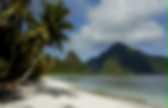
Government of Samoa - Official Website. The World Factbook. Samoa Travel Information and Travel Guide. Samoa has some of the most beautiful and enticing islandscapes in the South Pacific. It's an opinion few travellers will disagree with once they've spent a few weeks rattling up steep rocky trails to stare into the overgrown maws of extinct craters, swished their way through the lush undergrowth of sprawling plantations to clamber into eerie lava tubes, and strapped on a mask before coming face to face with multicoloured coral and other marine life in the shallow waters of deliriously lovely lagoons. Some of the beaches are so stunning that you'll just want to fall over and pretend you're a piece of driftwood, and hidden within isolated valleys in the hinterlands are paradisal waterfalls that plunge into idyllic swimming holes.
Add the rainforests and rugged sea cliffs of 'Upolu, and the lava flows of Savai'I into the mix, and you can begin to appreciate the enigmatic physical nature of these islands. The inhabitants of Samoa have taken a few cues from their languid tropical home. Samoa. More information about Samoa is available on the Samoa Page and from other Department of State publications and other sources listed at the end of this fact sheet. The United States established diplomatic relations with the Independent State of Samoa (then called Western Samoa) in 1971 following its independence from a New Zealand-administered trusteeship.
U.S. consular relations in the Samoan islands date back to 1856 when the first U.S. Consul was posted in Apia. Currently, the U.S. Over the years the United States and Samoa have enjoyed a close friendship based on trust and mutual interest, strengthened by people-to-people ties between the two countries, particularly among Americans of Samoan descent. In regional and international forums the United States and Samoa work together to protect the environment and fisheries, promote sustainable economic development in the Pacific region, and strengthen the tenets of democracy and human rights. U.S. Bilateral Economic Relations The U.S. Welcome to Samoa: Samoa Tourism Authority. Western Samoa Travel Guide. Seek an adventurous and enticing archipelago in the heart of South Pacific Ocean? Western Samoa has it all- unique living culture, breathtaking coastal scenery, rugged forested mountains, numerous fantastic waterfalls, tranquil, crystalline lagoons, cave pools and fascinating marine life.
This little piece of paradise offers everything you need to plan an attractive and unforgettable vacation. Here you are guaranteed a pleasant and enjoyable stay by spending your time swimming, diving, fishing, surfing and snorkeling. The climate of Samoa is tropical with common cyclones between December and March. Expect a cool, dry season from May to November and wet, humid weather the rest of the year. Average temperature hovers between 22C - 30C all year. Upolu Island with a land area of 1,100 sq km, is the most developed and mountainous island with a population of 110 000 inhabitants. Lefage Beach, one of the most peaceful and picturesque beaches on the island is a "must-go" place. Samoa. Samoa ( i/səˈmoʊ.ə/; Samoan: Sāmoa, IPA: [ˌsaːˈmoa]), officially the Independent State of Samoa (Samoan: Malo Sa'oloto Tuto'atasi o Sāmoa), formerly known as Western Samoa, is a country encompassing the western part of the Samoan Islands in the South Pacific Ocean.
It became independent from New Zealand in 1962. The two main islands of Samoa are Upolu and Savai'i, one of the biggest islands in Polynesia. The capital city, Apia, and Faleolo International Airport are situated on the island of Upolu. Samoa was admitted to the United Nations on 15 December 1976.[6] The entire island group, inclusive of American Samoa, was called "Navigator Islands" by European explorers before the 20th century because of the Samoans' seafaring skills.[7][8] History[edit] The oldest date so far from pre-historic remains in Samoa has been calculated by New Zealand scientists to a likely true age of circa 3,000 years ago from a Lapita site at Mulifanua during the 1970s.[9] 1899–1914[edit] Independence 1962[edit]