
Ionwatt lève 800 000 euros pour révolutionner le stockage d’électricité. Energie vendredi 7 novembre 2014 François Huber a pris la direction de l’entreprise ; il pilote la stratégie et le développement en lien avec des grands groupes industriels et des PME.
Il est accompagné par Didier Floner, maître de conférences à l’Université de Rennes 1 et inventeur de la technologie, qui devient conseiller scientifique de l’entreprise, tout comme Florence Geneste, chargée de recherche au CNRS. (© Ionwatt) Ionwatt, créée en août 2014 à Pacé près de Rennes, conçoit, fabrique et commercialise une nouvelle génération de batteries pour le stockage industriel d’électricité. Les fonds Emertec 5 et Go Capital accompagnés par un investisseur privé, Pierre-Yves Divet et la Société d’accélération du transfert de technologie (Satt) Ouest Valorisation* y investissent 800 000 euros pour financer un prototype pré-commercial de la batterie.
La technologie développée met en œuvre une batterie dans laquelle les électrolytes circulent au travers d’électrodes à haute performance. Business model vs. business plan. Communiquer et vendre son savoir-faire. Etre ou devenir entrepreneur ? Business Model Generation - Canvas. Using the Business Model Generation Tools There have been some questions posted lately asking for guidance in using the tools associated with the Business Model Generation approach - the Business Model Canvas and the Value Proposition Canvas.
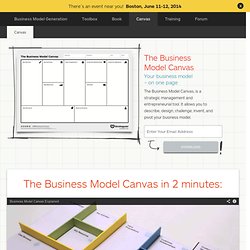
Though the Business Model Canvas was released under Creative Commons and the Value Proposition Canvas under copyright, the requirements for use of the two tools are really quite similar. Anyone may use the Business Model Canvas and the Value Proposition Canvas for their own work or to support others in understanding, analysing or changing their business models. This includes people who use the tools within their own companies or in a consulting capacity. The requirement, whether Creative Commons or Copyright, is full identification and credit of the source of the tool - Business Model Canvas is BusinessModelGeneration.com and the Value Proposition Canvas is BusinessModelGeneration.com and Business Model Foundry GmbH. Downloads/business_model_canvas_poster.pdf.
Lean startup - what is pivot. Post Mortem – 3 ans à l’incubateur HEC. Il y a 3 ans jour pour jour, le 1er septembre 2008, je débarquais sur le campus HEC avec pour mission de monter l’incubateur HEC.
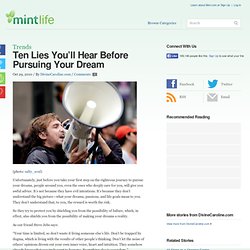
Nous sommes aujourd’hui le 1er septembre 2011, et j’entame une nouvelle aventure, avec (enfin) le retour à ce que je préfère, le lancement de startup. Ten Lies You’ll Hear Before Pursuing Your Dream. (photo: salty_soul) Unfortunately, just before you take your first step on the righteous journey to pursue your dreams, people around you, even the ones who deeply care for you, will give you awful advice.
Women Don’t Want To Run Startups Because They’d Rather Have Children. Editor’s note: The following is a guest post by Penelope Trunk.
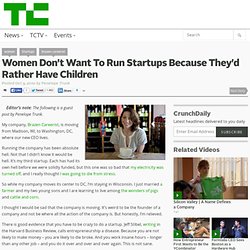
My company, Brazen Careerist, is moving from Madison, WI, to Washington, DC, where our new CEO lives. Running the company has been absolute hell. Not that I didn’t know it would be hell. It’s my third startup. Each has had its own hell before we were solidly funded, but this one was so bad that my electricity was turned off, and I really thought I was going to die from stress. So while my company moves its center to DC, I’m staying in Wisconsin. I thought I would be sad that the company is moving.
There is good evidence that you have to be crazy to do a startup. In fact, David Segal reports in the New York Times that there is a mania that entrepreneurs exhibit that is very attractive to investors. So I had a going away party. It’s hard to not be the center, but I want to be the center of my family. Did you know that in Farmville, women make colorful, fun farms, and men make big, sprawling farms? 7 Warning Signs Your “Big Idea” Is Going to Flop. Ever have a really great idea for a product?

You know, the kind of idea that leaves you slack-jawed and wide-eyed with wonder at the sheer potential of it all. You want to grab someone by the shoulders and explain the whole thing in a breathless rush, watching their eyes grow in wonder as they realize you’re going to be rich and famous. For the next few hours or even days, you find yourself revved up in high gear, eager to turn your big idea into reality. Oh yeah. How Many Hours Should a Startup Employee Work? Every so often I get drawn into the debate about startup employees and how much they should work.
Should you hire workaholics? Is it expected that startup employees work 100+ hours per week? Should they be online all the time, constantly available and ready to go? It depends. And it’s up to you. But it got me thinking… One of the big problems I’m seeing with a startup’s expectations for “hours worked” is that they use it as a metric of employee quality and success.
We need to think about other measurable indicators of an employee’s quality and value.