
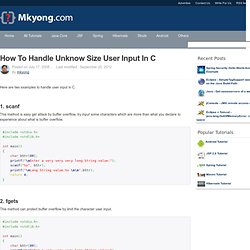
How to handle unknow size user input in C. Here are two examples to handle user input in C. 1. scanf This method is easy get attack by buffer overflow, try input some characters which are more than what you declare to experience about what is buffer overflow. 2. fgets This method can protect buffer overflow by limit the character user input.
However, above two methods only can handle normal user input, how about i want to handle user input with 1000 or even more characters? How To: C / C++ Main. GNU Emacs Lisp Reference Manual. This variable is set by major modes, as a buffer-local variable, to specify how to fontify text in that mode.
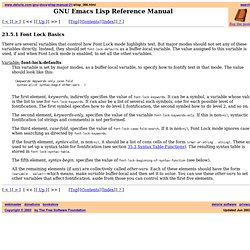
The value should look like this: The first element, , indirectly specifies the value of font-lock-keywords. It can be a symbol, a variable whose value is the list to use for font-lock-keywords. It can also be a list of several such symbols, one for each possible level of fontification. Bjarne Stroustrup's Homepage. Boost C++ Libraries. cPlusPlus. The essential tools needed to follow these tutorials are a computer and a compiler toolchain able to compile C++ code and build the programs to run on it.
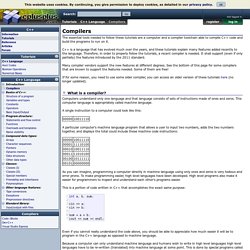
C++ is a language that has evolved much over the years, and these tutorials explain many features added recently to the language. Therefore, in order to properly follow the tutorials, a recent compiler is needed.