
Wolfram Education Portal: A Helpful Tool For Teachers To Deliver Math Concepts To Students. Wolfram has long been offering educational tools for teachers and students.

Its latest is an online tool that offers teachers the ability to easily deliver math concepts to their students. The tool is called Wolfram Education Portal. Wolfram Education Portal is a free to use online tool that helps teachers with the math courses they are teaching. Mainly the tool focuses on algebra and calculus. Among the many tools offered by the Education Portal, teachers will find an eTextbook, a lesson plan, demonstration tools such as graphs, and widgets such as calculators to solve questions quickly. To get started with the site, you will have to sign up for an account on it and then download its player through which you will be able to use the online tools.
Features: A user-friendly web service.Helps teachers teach math courses.Supports algebra and calculus.Offers numerous tools such as lesson plans, online textbooks, and widgets.Similar tools: RhymenLearn and Mathematics In Movies. More Minds-on Activities for Teaching Biology. The resources listed below include: minds-on, hands-on activities and minds-on analysis and discussion activities for teaching biology to high school and middle school students and students in non-major college biology coursesoverviews of important biological topicsgames for learning and review.
Many of these activities are explicitly aligned with the Next Generation Science Standards, as indicated by (NGSS) in the descriptions below and as described in Summary Tables and in the Teacher Notes for individual activities. These activities foster student understanding of Disciplinary Core Ideas, engage students in Scientific Practices, provide the opportunity to discuss Crosscutting Concepts, and prepare students to meet the Performance Expectations of the Next Generation Science Standards. We encourage you to subscribe to our listserv to receive notices when we post new activities or significantly improved versions of current activities. Shareable sticky notes web-app.
Evernote. InteractiveBiology's Channel. Bloomsapps. Using Blooms Taxonomy in education is a highly effective way to scaffold learning for the students.
With the recent popularity and pervasive nature of iOS devices in school districts it is essential for educators to understand how to implement Blooms in the classroom using the apps that are available. While this list is by no means fully comprehensive, it will assist educators in getting started when implementing iOS devices in the classroom.
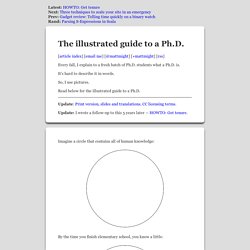
This site will change almost daily as it will be updated with new and exciting apps! If you find any that you have worked with in your classroom please email dmileham@e1b.org or tweet @bloomsapps or @dmileham75 with your suggestions. Thanks for checking the site! Two Links to some iTunesU courses relating to iOS Integration: 1 iPad by Erie 1 Boards of Cooperative Educational Services ( Movie Making\Digital Storytelling Camera to PDF Free - cool little app that turns your device into a scanner. LiveBinders: I would be remiss if I didn't post this. The illustrated guide to a Ph.D. Imagine a circle that contains all of human knowledge: By the time you finish elementary school, you know a little: By the time you finish high school, you know a bit more: With a bachelor's degree, you gain a specialty: A master's degree deepens that specialty: Reading research papers takes you to the edge of human knowledge: Once you're at the boundary, you focus:
GRADES_DONT_MATTER.m4v. Yale-New Have Teacher's Institute. Announcing the 2011 Winners – Congrats to All! Watching Teachers Work. Identifying good teachers is a high priority in education reform, yet the debate rarely focuses on how education might improve if policies were based on teachers’ individual interactions with their students.

This report argues for improving early education up through the third grade (PreK-3rd) by actually watching teachers in action using innovative observation tools in combination with evaluation and training programs. Watching Teachers Work: Using Observation Tools to Promote Effective Teaching in the Early Years and Early Grades paints a picture of the dismal state of early education for many children – especially the disadvantaged – who are rarely given access to the kinds of stimulating, content-rich conversations that provide them with the cognitive and social-emotional skills they need to succeed throughout their years in school. The report offers 17 recommendations to policymakers at all levels of government, as well as to educators and teacher-preparation programs. Classroom Assessment Techniques. Lee Haugen Center for Teaching Excellence, Iowa State University February, 1999 What are CATs?
Classroom Assessment Techniques are formative evaluation methods that serve two purposes. They can help you to assess the degree to which your students understand the course content and they can provide you with information about the effectiveness of your teaching methods. Most are designed to be quick and easy to use and each CAT provides different kinds of information. Formative Evaluations Formative evaluations provide information that can be used to improve course content, methods of teaching, and, ultimately, student learning. How do CATs improve teaching and learning? When CATS are used frequently, they can have the following impacts: For faculty, CATs can: