
Richard Berman Energy Industry Talk Secretly Taped. Photo WASHINGTON — If the oil and gas industry wants to prevent its opponents from slowing its efforts to drill in more places, it must be prepared to employ tactics like digging up embarrassing tidbits about environmentalists and liberal celebrities, a veteran Washington political consultant told a room full of industry executives in a speech that was secretly recorded.
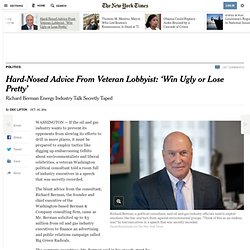
The blunt advice from the consultant, Richard Berman, the founder and chief executive of the Washington-based Berman & Company consulting firm, came as Mr. Berman solicited up to $3 million from oil and gas industry executives to finance an advertising and public relations campaign called Big Green Radicals. The company executives, Mr. Gov. Christie Shifted Pension Cash to Wall Street, Costing New Jersey Taxpayers $3.8 Billion. This computer programmer solved gerrymandering in his spare time. 2010 Redistricting Results.
8 Things You Should Know About Corporations Like Pearson that Make Huge Profits from Standardized Tests. Photo Credit: Shutterstock.com/Eric Von Seggern August 6, 2013 | Like this article?
Join our email list: Stay up to date with the latest headlines via email.
US immigration - Quartz. Nearly 20 years ago, a friend of mine left a farm in West Africa and came to America alone.

He worked his way through college by doing manual labor and acquired a few ivy-league degrees. Untangling the webs of immigration lobbying. (Visualizations by Alexander Furnas and Amy Cesal) As Congress inches toward major immigration legislation, a new Sunlight Foundation analysis (based on almost 8,000 lobbying reports) offers a comprehensive and interactive guide to the web of interests with something at stake.
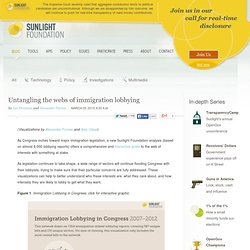
As legislation continues to take shape, a wide range of sectors will continue flooding Congress with their lobbyists, trying to make sure that their particular concerns are fully addressed. US House passes bill charging $5000 to protest drilling. House Resolution 1965, known as the Federal Land Jobs and Energy Security Act, passed the House on Wednesday.
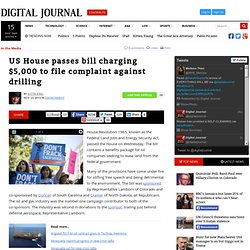
The bill contains a benefits package for oil companies seeking to lease land from the federal government. Nightmare in Maryville: Teens’ sexual encounter ignites a firestorm against family. The siding and gutters had melted.
Could Texas Become a Blue State? When historians look back on Mitt Romney’s bid for the Presidency, one trend will be clear: no Republican candidate ever ran a similar campaign again.
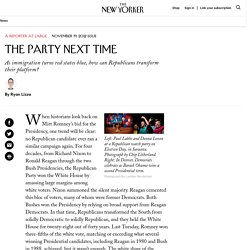
For four decades, from Richard Nixon to Ronald Reagan through the two Bush Presidencies, the Republican Party won the White House by amassing large margins among white voters. Why does the IRS regulate political groups? A look at the complex world of campaign finance. The controversy over the Internal Revenue Service's handling of applications for non-profit status from Tea Party groups has put a spotlight on a subject with which we at the Sunlight Foundation Reporting Group are all too painfully familiar: The migraine-producing complexity of the nation's campaign finance system.
To shed some light on the ongoing debate, we've decided to share what we know. 'People Don't Realize How Fragile Democracy Really Is' - James Fallows - Politics. Exposé: America's Investigative Reports. POV - The Camden 28. Gun lobby has opposed research on effects of gun ownership/gun laws. Photo: Shutterstock Last week, after giving myself an initial overview of the scientific research on how gun ownership and gun laws affect violent crime, I told you that it seems like there's not a solid consensus on this issue.
At least not in the United States. Unions Are in Peril. (Photo: mar is sea Y / Flickr)Lost in the Supreme Court media chatter last week: a disturbing ruling in Knox vs.
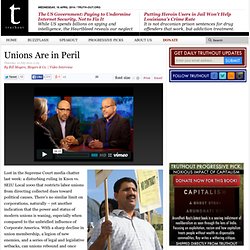
SEIU Local 1000 that restricts labor unions from directing collected dues toward political causes. There's no similar limit on corporations, naturally – yet another indication that the power and status of modern unions is waning, especially when compared to the unbridled influence of Corporate America. New court filing reveals how the 2004 Ohio presidential election was hacked. A new filing in the King Lincoln Bronzeville v.
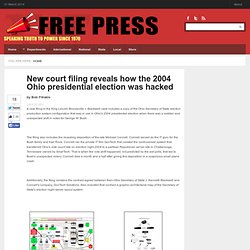
Blackwell case includes a copy of the Ohio Secretary of State election production system configuration that was in use in Ohio's 2004 presidential election when there was a sudden and unexpected shift in votes for George W. Bush.
Politicians. Democrats. Republicans. Targeting the Post Office. Leaked EPA Documents Expose Effort to Hide Dangers of Fracking. Wait, Did the USDA Just Deregulate All New Genetically Modified Crops? The Money & Media Election Complex. Unchecked by campaign finance regulation, unchallenged by a journalism sufficient to expose abuses, a nearly unbeatable force opposed progressives in 2010.
Like the wizard telling the people of Oz to "Pay no attention to that man behind the curtain," Karl Rove used media appearances at the close of the 2010 midterm campaign to dismiss President Obama's complaints that Republican consultants, led by the former White House political czar, were distorting Senate and House races across the country with a flood of money—hundreds of millions of dollars—from multinational corporations and billionaire conservatives into Senate and House races. How Roger Ailes Built the Fox News Fear Factory. The Mainstream Media's Trivial Pursuit of Campaign 2012.
Republican presidential candidate, former Massachusetts Gov. FCC decision strikes critical blow to right-wing radio dominance. By Stephen C. WebsterTuesday, March 20, 2012 13:02 EDT A Federal Communications Commission (FCC) decision issued Monday (PDF) will clear the runway for hundreds of new community radio stations that broadcast on low-power FM signals, bringing progressive, community voices to urban areas that have for decades only known what’s being broadcast by major corporations and America’s political right. Colorblind. I am confident that I have held out longer than any other pundit to weigh in on both the phenomenon that is Barack Obama and the question of whether race will trump gender as America looks toward election 2008.
Black vs. "black" Barack Obama’s candidacy has brought the issue of race back to center stage in America. A provocative shot was fired by Debra Dickerson, who in the Jan. 22 issue of Salon argued that because Barack Obama is not a descendant of African slaves, he is not black.