
Karma. Endless knot Nepalese temple prayer wheel Karma symbols such as endless knot (above) are common cultural motifs in Asia.
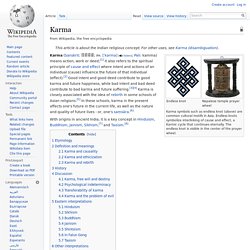
Endless knots symbolize interlinking of cause and effect, a Karmic cycle that continues eternally. The endless knot is visible in the center of the prayer wheel. Karma (Sanskrit: कर्म; IPA: [ˈkərmə]; Pali: kamma) means action, work or deed;[1] it also refers to the spiritual principle of cause and effect where intent and actions of an individual (cause) influence the future of that individual (effect).[2] Good intent and good deed contribute to good karma and future happiness, while bad intent and bad deed contribute to bad karma and future suffering.[3][4] Karma is closely associated with the idea of rebirth in some schools of Asian religions.[5] In these schools, karma in the present affects one's future in the current life, as well as the nature and quality of future lives - or, one's saṃsāra.[6]
Ethics, Being, and Existentialism. Megan McClure April 26, 1999 Ethics, Being, and Existentialism Introduction:

The Ego In Slow Dissolve : outlookindia.com.