
Tărtăria tablets. Article 50 (Part 1) - Waterfox. Figure 4 The nth Fibonacci number (1) is defined as: Fn = Fn−1 + Fn-2, if n>1, where F0 = 0 & F1 = 1.
Ptolemy's world map. Magnificent Maps: Power, Propaganda and Art - Psalter World Map. Buy the print <img src="/magnificentmaps/images/map1noflash.jpg" alt="Psalter World Map" width="750" height="385" /><p>This is alternative content as your computer requires the Adobe Flash Player and a browser with JavaScript enabled.
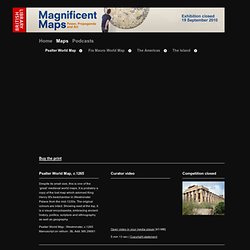
<a href=" Flash</a> and <a href="/aboutus/quickinfo/webtech/jsinstructs/index.html">enable Javascript</a>. </p> Psalter World Map, c.1265 Despite its small size, this is one of the ‘great’ medieval world maps. Psalter World Map : Westminster, c.1265 Manuscript on vellum : BL Add. Geographicus Antique Maps: Rare Antique Map Gallery. The Map of The Creator. Piri Reis map. Surviving fragment of the Piri Reis map showing Central and South America shores.
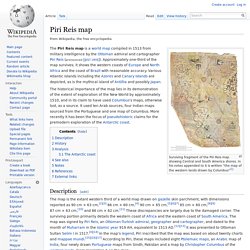
In his notes appended to it is written "the map of the western lands drawn by Columbus"[1] The Piri Reis map is a world map compiled in 1513 from military intelligence by the Ottoman admiral and cartographer Piri Reis (pronounced [piɾi ɾeis]). Approximately one-third of the map survives; it shows the western coasts of Europe and North Africa and the coast of Brazil with reasonable accuracy. Earliest Known Hebrew Text In Proto-Canaanite Script Discovered In Area Where 'David Slew Goliath'
The earliest known Hebrew text written in a Proto-Canaanite script has been discovered by Hebrew University archaeologists in an ancient city in the area where legend has it that David slew Goliath – the earliest Judean city found to date.

The 3,000 year old finding is thought to be the most significant archaeological discovery in Israel since the Dead Sea Scrolls – predating them by 1,000 years. The ostracon (pottery shard inscribed with writing in ink) comprises five lines of text divided by black lines and measures 15 x 15 cm. and was found at excavations of a 10th century B.C.E. fortress - the oldest known Judaic city. The ostracon was found lying on the floor inside a building near the city gate of the site, known as the Elah Fortress at Khirbet Qeiyafa. Artifacts. Ruins. Ankh. Ankh It represents the concept of eternal life, which is the general meaning of the symbol.
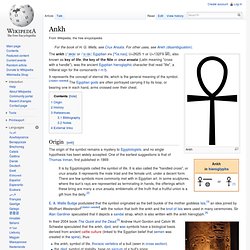
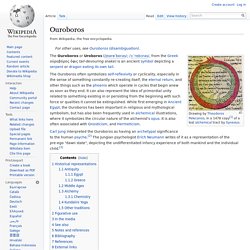
[citation needed] The Egyptian gods are often portrayed carrying it by its loop, or bearing one in each hand, arms crossed over their chest. Ouroboros - Wikipedia, the free encyclopedia - Waterfox. Historical representations[edit] Antiquity[edit] In ancient Egypt, the scarab (or dung beetle) was viewed as a sign of eternal renewal and reemergence of life, a reminder of the life to come.
(See also "Atum" and "Ma'at. ") The ancient Mayans and Aztecs also took a cyclical view of time. Shooting Down the Saqqara Bird. Ever heard of the Saqqara Bird?

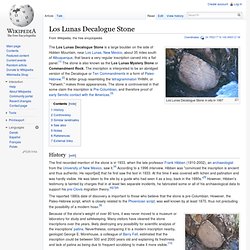
Discovered in 1898, it's an Egyptian artifact believed to be about 2,000 years old. Made of sycamore wood, the bird may have been a ceremonial object, a toy, or even some kind of weather vane, but a lack of historical references to the bird means that we may never know exactly what it was intended for. The bird is a fun historical footnote, a minor mystery whose true purpose may never be known, but it doesn't represent anything earth-shattering...or does it? Anything remotely unexplained in archaeology serves as a lightning rod for crackpot theories, and the Saqqara Bird is no exception. For many years alternative history enthusiasts have been making some pretty incredible claims about the Saqqara Bird. Los Lunas Decalogue Stone. Coordinates: Los Lunas Decalogue Stone in situ in 1997 The Los Lunas Decalogue Stone is a large boulder on the side of Hidden Mountain, near Los Lunas, New Mexico, about 35 miles south of Albuquerque, that bears a very regular inscription carved into a flat panel.[1] The stone is also known as the Los Lunas Mystery Stone or Commandment Rock.
THE AIUD ARTIFACT. 1.
The aluminium wedge of Aiud (also called the object of Aiud) is a mysterious artifact of uncertain origin in the shape of a wedge, which was found at an archeological site near the Roman town of Aiud, allegedly near by a mammoth skeleton. It is composed of 89% aluminium covered by a thick oxide layer. The thickness of this oxide layer is said to be confirmation that the object is anachronistic, at least three-hundred or four-hundred years old. The aluminium wedge of Aiud is often cited as "proof" that aliens visited earth at earlier times, because aluminium was difficult to produce in quantity before 1825.
Most scientists, however, believe that this object is a fake. 2. 3. Three perfectly shaped discs found buried in a South Australian coal mine are baffling geologists and exciting flying saucer researchers. "What can they be? So how about describing these as landing pads? Aluminium wedge of Aiud - Encyclopedia. Acámbaro figures. The Acámbaro figures are several thousand small ceramic figurines allegedly found by Waldemar Julsrud in July 1944, in the Mexican city of Acámbaro, Guanajuato.
The figurines are said by some to resemble dinosaurs and are sometimes cited as anachronisms. Some young-Earth creationists have adduced the existence of figurines as credible evidence for the coexistence of dinosaurs and humans, in an attempt to cast doubt on scientific dating methods and potentially offer support for a literal interpretation of the Genesis creation narrative.[1] History[edit] The Acámbaro figures were uncovered by a German immigrant and hardware merchant named Waldemar Julsrud. According to Dennis Swift, a young-Earth creationist and major proponent of the figures, Julsrud stumbled upon the figures while riding his horse and hired a local farmer to dig up the remaining figures, paying him for each figure he brought back. Archaeologist Charles C. Cyrus_cylinder_extract.png (PNG Image, 748x386 pixels)