
BBB Seed sur Twitter : "Design a Party Garden Blog By Sandy Swegel #gardeningchat #partyplanner #summer #gardening. Design a Party Garden. Not Far From TheTree sur Twitter : "Have apple tree(s)? You prune 'em and we'll pick 'em. #gardening #pruning #DIY. How To Prune An Apple Tree. 3.
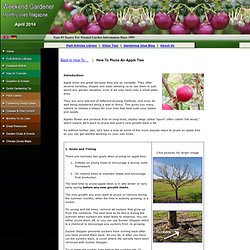
Pruning Young Trees For mature or neglected apple trees, skip to number 4 The day apple trees are planted is the day to begin to train and prune them for future fruit production. Too often people plant apple trees and leave them untended for several years. How to Make a Simple Soil Blocker. I have long been fascinated with soil blockers.
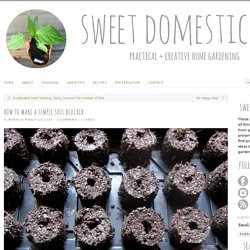
It seems like such a smart, efficient, and economical way to start seeds, but when faced with the option of purchasing a soil blocker or two or spending the money elsewhere in the garden, the soil blocker never quite made it to a priority in the garden budget. That changed this winter, when I realized that you could totally make your own soil blocker (of course you can!) Northern Gardeners Almanac.
The combination of short summers and long hours of daylight presents a unique challenge for northern gardeners who hope to harvest crops before the autumn killing frosts arrive.
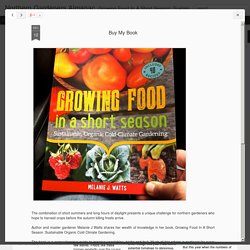
Author and master gardener Melanie J Watts shares her wealth of knowledge in her book, Growing Food In A Short Season :Sustainable Organic Cold Climate Gardening. The book is a comprehensive guide to growing vegetables, herbs and fruit. Much of her advice is pertinent for every gardener no matter where they live. Long before Organic and Sustainability had become part of our awareness Melanie believed that healthy soil, water and sunlight were the ingredients for producing abundant harvests of tasty food.
She shows the gardener how to work with nature by paying attention to frost dates, microclimates and crop maturity dates. Melanie offers advice on planting, harvesting and preserving produce for the long winter. Witter / ? Saving Seeds. Eat local and save money through the art of seed saving.
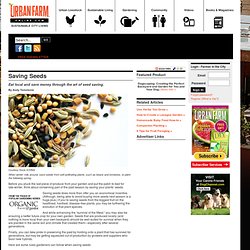
By Andy Tomolonis Courtesy Stock.XCHNG When winter rolls around, save seeds from self-pollinating plants, such as beans and tomatoes, to plant the following spring. Before you pluck the last piece of produce from your garden and put the patch to bed for late-winter, think about conserving part of the past season by saving your plants’ seeds. StanleyGarden : Couple of pie pumpkins hanging... StanleyGarden : View inside the purple potato... How To Make Succession Planting and Year-Round Gardening Really Work. From the garden to the table. So, in my ever-intensifying quest to simplify our family life and the food we eat, I’m finding myself increasingly distanced from boxed and packaged meals and ingredients and more and more enamoured with handfuls of fresh, earthy things.
It’s been shocking not only to notice how we feel much better after eating this way, but we’ve also been able to decrease the amount of money that we throw away on poor quality groceries every month, too. Seeing as I’ve become quite the produce aisle stalker (yes, I’m that weirdo drooling over beets that still have their tops attached!) , I became obsessed with the idea of starting a fledgling garden of my own this year. How to Make a Square Foot Garden. I’d like to introduce you to a new way of gardening.
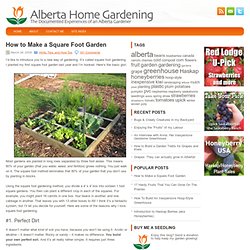
It’s called square foot gardening. I planted my first square foot garden last year and I’m hooked. Here’s the basic gist: Most gardens are planted in long rows separated by three foot aisles. This means 80% of your garden (that you water, weed, and fertilize) grows nothing. Using the square foot gardening method, you divide a 4′ x 4′ box into sixteen 1 foot square gardens. . #1. Square Foot Garden Plant Spacing Guides. Now that you have your boxes built and the grids put on, it’s quite easy to visualise the plants growing in it.
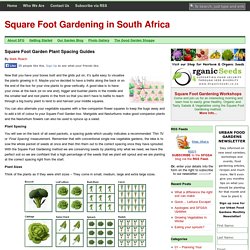
Maybe you’ve decided to have a trellis along the back or on the end of the box for your vine plants to grow vertically. A good idea is to have your vines at the back (or on one end), bigger and bushier plants in the middle and the smaller leaf and root plants in the front so that you don’t have to battle to reach through a big bushy plant to tend to and harvest your middle squares. You can also alternate your vegetable squares with a few companion flower squares to keep the bugs away and to add a bit of colour to your Square Foot Garden box. Marigolds and Nasturtiums make good companion plants and the Nasturtium flowers can also be used to spruce up a salad. Plant Spacing.
Brown Thumb Mama: Make Your Own Seed Starting Light. I love all the goodies in the gardening and seed catalogs, but most of the time, they’re just too expensive.
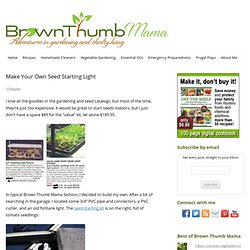
It would be great to start seeds indoors, but I just don’t have a spare $89 for the “value” kit, let alone $189.95. In typical Brown Thumb Mama fashion, I decided to build my own. After a bit of searching in the garage, I located some 3/4″ PVC pipe and connectors, a PVC cutter, and an old fishtank light. The seed starting kit is on the right, full of tomato seedlings. First, measure the light to make sure you cut the pipe in the right place. Cut a piece for the top and for both sides. After cutting, slide the corner pieces on. Lay all the pieces out and fit them together. Repo the pieces for the base from Jackjack. Put it together and make sure it stands up well. Use a bit of old chain to attach the light to the top piece.
Majesta Trees of Knowledge. Sustainable Eats & the Dancing Goat Gardens Communal Project. This is a collection of helpful tools that I’ve created through the years to help plan my garden.
Ten Mistakes New Herb Gardeners Make (and How to Avoid Them!) So you're thinking of herb gardening, or maybe you tried it last year and it was an utter disaster?
A Recipe for a Hugelkultur Raised Bed Permaculture Research Institute. I’ve been wanting to do a hugelkultur bed ever since I saw an article about a village store garden where people could walk around these really tall raised beds picking their veggies without bending.
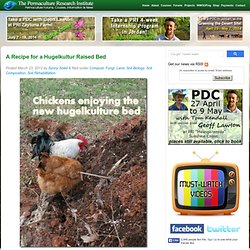
Hugelkultur is a Central European-style raised bed which uses rotting wood as its foundation. Toby Hemenway mentions it in Gaia’s Garden, offering the hot tip that he can start potatoes a month early in this kind of bed. The hugelkultur raised bed can be built in many different ways, towering as high as you can reach or in a deep trench so that the planting surface is more or less level with the ground. Creating a Pallet Garden – Step by Step Instructions.
How to build a Pyramid Strawberry Planter. Not only do strawberries taste good, they contain antioxidants and nutrients that help improve the body's immune system. They are also a great source of vitamin C, fiber, folic acid and potassium. There are three types of strawberries: June Bearing, Everbearing, and Day Neutral. produce a single crop in June (or early spring), depending upon the area.