
Macbook Pro 17" mit SD-Kartenleser aufrüsten. Der Größte der MacBook Pros verfügt bekannter weise weder über einen SD-Kartenslot noch über einen USB3-Anschluss.

Das fehlen des SD-Kart-Slots hat mich immer am meisten genervt da ich diesen doch häufiger gebraucht hätte. Gut das Apple dem Macbook Pro 17″ wenigstens einen PCMCIA-ExpressCard-Slot spendiert hat. Über diesen lassen sich so ziemlich alle gängigen Anschlüsse mit Leichtigkeit nachrüsten. Einfach die gewünschte ExpressCard kaufen, einstecken, Treiber installieren und zufrieden sein. Ich habe mir von Transcend für wenige Euro einen Ultra High Speed Card Reader gekauft mit dem ich die gängigsten SD, SDHC, SDXC, UHS-1 Karten nutzen kann. Nun was soll ich sagen, ich bin absolut zufrieden. Programmierer, Webdesigner, Grafiker, Mac-User, Blogger, Screencaster. profwebapps ist auch bei Google+ vertreten. A shell function to make 'rm' move files to the trash. Command line users: Have you ever wished rm would put stuff in the Trash instead of just deleting it?
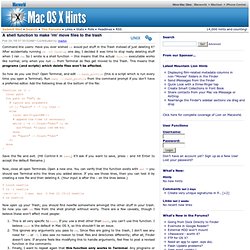
After accidentally running rm -rf Desktop one day, I decided it was time to stop really deleting stuff when I ran rm. So I wrote is a shell function -- this means that the actual /bin/rm executable works like normal; only when you run rm from Terminal do files get moved to the Trash. This means that programs (and scripts) which delete files won't be affected. So how do you use this? Open Terminal, and edit ~/.bash_profile (this is a script which is run every time you open a Terminal).
Save the file and exit. Now, close all open Terminals. Home-Verzeichnis Verschieben – apfelwiki.de. Qualitaetsoffensive Was wird gemacht?
: Das Stamm- (Wurzel- oder Home-)Verzeichnis eines Nutzers wird verschoben.Zielgruppe: (ambitionierte) Anfänger bis FortgeschritteneDauer: ca. 15 Minuten Unter Umständen ist es auch unter Mac OS X sinnvoll die Nutzerdaten von den Systemdaten getrennt auf einer anderen Partition zu halten. Das erleichtert Neuinstallationen und ist insbesondere für echte Mehrbenutzersysteme sehr zu empfehlen.
Sowohl in der Windows-Welt ist dies nicht unüblich und unter Unix Standard. Hier soll der nachträgliche Umzug eines Benutzers auf eine andere Partition beschrieben werden, da das der komplizierteste Fall ist. Im Wesentlichen gibt es folgende Zugänge um die Rechte zu erhalten, die man benötigt, um einen Benutzer überhaupt umziehen lassen zu können.
Die alte Unix-Methode mittels eines allmächtigen root-Benutzers. 2.1 1. Das hat den Zweck, dass wirklich keine Programme eines Benutzers mehr laufen, die vielleicht die Daten im Benutzerordner zeitgleich ändern. 2.2 2. Wie kann ich eine bootfähige OS X Lion DVD erstellen? Versteckte dateien im mac anzeigen @ DerEinzige & traumfahne.de. Gedanken zur illusorischen realität des einzigen und seines eigenthums ... die zeitschrift zum selbstausdrucken ... ausgabe 196 ... 9. jahrgang. rubrik: mac shell terminal DerEinzige & traumfahne.de zeitschrift zum selbstausdrucken im eigenverlag vom 12. 11. 2006 | gesamtausgaben: 196 12.
November 2006 | ausgabe drucken | 24 leserbriefe | leserbrief schreiben #edit 14.10.2007 verdammt , klick doch mal einer auf die google ads … tut doch nicht weh … scnr nachdem wohl ziemlich häufig nach lösungen für obiges problem ( mac os x jaguar, panther, tiger) gesucht und dabei oft auf überflüssige oder schädliche tools verwiesen wird hier eine einfache lösung: die fett markierten zeilen kopieren (apfel+c), programme/dienstprogramme/terminal.app öffnen und dort als eine zeile einfügen (apfel+v), mit der entertaste bestätigen … alles anzeigen: defaults write com.apple.finder AppleShowAllFiles -boolean true;killall Finder. Mega Roundup of Geektool scripts + inspiration gallery. How to remove troublesome GeekTool geeklets. Projects.
Geeklets - The best place to get GeekTool scripts.