
Kotter International - Home. Direct the Rider, Motivate the Elephant, and Shape the Path. “If you don’t like something change it; if you can’t change it, change the way you think about it.” — Mary Engelbreit I’ve written about the Elephant and the Rider before.

This post puts it together into a simple way to remember a change framework. Change isn’t easy, but a framework helps makes it easier and helps you build skill. What, why and how of ECM. What is Enterprise Change Management?

Change management is defined as the process, tools and techniques to manage the people side of change. It involves 1) understanding the change that is being implemented, 2) analyzing the people that will be impacted by the change and 3) creating the plans and actions that will help drive the successful implementation of the change from the people-perspective (such as communications, sponsorship, coaching, training, resistance management and reinforcement mechanisms).
Enterprise Change Management is different - it is the deployment of change management or the building of change management competencies across the entire organization. In essence, it is ensuring that change management is done effectively on all projects and changes in the organization. Prosci's research and engagements with organizations show three main elements that define Enterprise Change Management: McKinsey 7S Model. This model was developed in the 1980's by Robert Waterman, Tom Peters and Julien Philips whilst working for McKinsey and originally presented in their article " Structure is not Organisation".
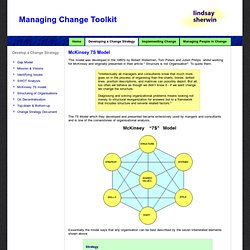
To quote them: "Intellectually all managers and consultants know that much more goes on in the process of organising than the charts, boxes, dotted lines, position descriptions, and matrices can possibly depict.