
Coping with PTSD - you and your loved ones. HOW TO DEAL WITH PTSD NIGHTMARES. Recurring nightmares are common symptoms of Post- Traumatic Stress Disorder.
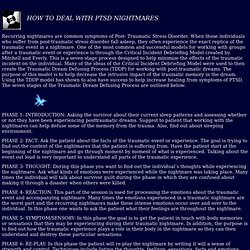
When those individuals who suffer from post-traumatic stress disorder fall asleep, they often experience the exact replica of the traumatic event in a nightmare. One of the most common and successful models for working with groups after a traumatic event or experience is through the Critical Incident Debriefing Model created by Mitchell and Everly. This is a seven-stage process designed to help minimize the effects of the traumatic incident on the individual.
Many of the ideas of the Critical Incident Debriefing Model were used to then create the Traumatic Dream Defusing Process (TDDP) for working with post-traumatic dreams. Nightmares and PTSD. Dream sleep takes sting out of painful memories. They say time heals all wounds, and new research from the University of California, Berkeley, indicates that time spent in dream sleep can help us overcome painful ordeals.
UC Berkeley researchers have found that during the dream phase of sleep, also known as REM sleep, our stress chemistry shuts down and the brain processes emotional experiences and takes the edge off difficult memories. The findings offer a compelling explanation for why people with post-traumatic stress disorder (PTSD), such as war veterans, have a hard time recovering from distressing experiences and suffer reoccurring nightmares. Self-Help and Coping. Help for Post Traumatic Stress (PTSD) and dissociation.