
PHYLO: THE TRADING CARD GAME.
Giant Spider Species Discovered in Middle Eastern Sand Dunes. Scientists have unearthed a completely new species of spider hiding in sand dunes on the Israel-Jordan border.
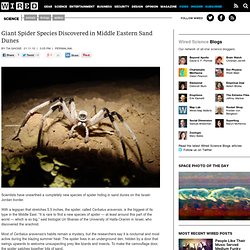
With a legspan that stretches 5.5 inches, the spider, called Cerbalus aravensis, is the biggest of its type in the Middle East. “It is rare to find a new species of spider — at least around this part of the world — which is so big,” said biologist Uri Shanas of the University of Haifa-Oranim in Israel, who discovered the arachnid. Most of Cerbalus aravensis‘s habits remain a mystery, but the researchers say it is nocturnal and most active during the blazing summer heat. The spider lives in an underground den, hidden by a door that swings upwards to welcome unsuspecting prey like lizards and insects. Humans driving extinction faster than species can evolve, say ex.
For the first time since the dinosaurs disappeared, humans are driving animals and plants to extinction faster than new species can evolve, one of the world's experts on biodiversity has warned.
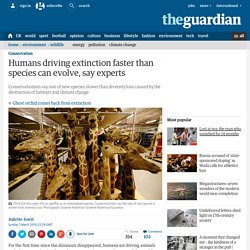
Conservation experts have already signalled that the world is in the grip of the "sixth great extinction" of species, driven by the destruction of natural habitats, hunting, the spread of alien predators and disease, and climate change. However until recently it has been hoped that the rate at which new species were evolving could keep pace with the loss of diversity of life. Speaking in advance of two reports next week on the state of wildlife in Britain and Europe, Simon Stuart, chair of the Species Survival Commission for the International Union for the Conservation of Nature – the body which officially declares species threatened and extinct – said that point had now "almost certainly" been crossed. 7 Cat Species Found in 1 Forest—A Record.