
Alice Moloney. 2. Engaging with communities. Chapter 2: Engaging with Communities Community understanding of children’s learning The wider world of family and community is a fundamental part of the early childhood curriculum and is mutually supportive of the well being of whānau/families, local communities and neighbourhoods.
Making children’s learning experiences visible ensures that parents and whānau gain an understanding of those learning experiences, which in turn empowers children to become self-directed learners. Families should be part of the assessment and evaluation of the curriculum as well as of children’slearning and development. Parents and caregivers have a wealth of valuable information andunderstandings regarding their children… Children’s learning and development are fostered ifthe well being of their family and community issupported; if their family, culture, knowledge andcommunity are respected; and if there is a strongconnection and consistency among all the aspects ofthe child’s world.
The projects Outcomes. The Engagement Pyramid: Six Levels of Connecting People and Social Change — Groundwire. West Coast firm transfers clients to experts in Plone hosting UPDATE Mar. 12th, 2013: The board at Groundwire asked us to share this official press release (PDF) to help explain what has happened.

INDIANAPOLIS, Feb. 1, 2013 - Six Feet Up has acquired 110 Plone hosting clients from a partner in Seattle. Groundwire.org, an agency that helps non-profit organizations with their web strategy and development needs, has decided to exit the hosting business. They determined it was best for their clients to transfer all of their managed web hosting services to Six Feet Up. The clients will receive hosting, support, and Plone enhancements from Six Feet Up. “This is a significant expansion of Plone hosting clients that we serve.” said Six Feet Up CTO, Calvin Hendryx-Parker. Six Feet Up operates two data centers for Python-based web applications, like Plone, and specializes in developing and hosting sophisticated web applications.
Plone is an open source enterprise web content management system. Teaching Your Child to Be Ethical. Every parent would love to draw an imaginary halo around their child's head.

Especially if it came with the behavior to go with it. Unfortunately, there will come a time when your child will lie. Or cheat. He's only human. It’s a parent's job to set up a system of values, and then enforce those values every day. Josephson’s Institute of Ethics outlines what they call the Six Pillars of Character. Trustworthiness - Be honest.
As important as it is to define values for your family, even more important, says Josephson, is how you enforce them with your child. Teach your children that character counts - that their success and happiness will depend on who they are inside, not what they have or how they look. Building character doesn’t happen overnight. What's%20Next%20-%2021%20ideas%20for%2021st%20century%20learning. Lei07022. Students Who Challenge Us:Cracking the Behavior Code. School Page. Seven Degrees of Connectedness... the Infographic. While I haven't had time to respond to all the comments I received on the framework I posted yesterday, I did engage in a short conversation with Sylvia Tolisano about turning the Seven Degrees of Connectness into an infographic.
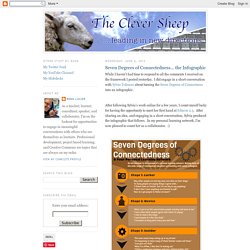
After following Sylvia's work online for a few years, I count myself lucky for having the opportunity to meet her first hand at Educon 2.3. After sharing an idea, and engaging in a short conversation, Sylvia produced the infographic that follows. In my personal learning network, I'm now pleased to count her as a collaborator. :)