
Character Motivation Goal. Character Profile Templates. Character Chart for Fiction Writers - EpiGuide.com. If you're a fiction writer -- whether you're working on a novel, short story, screenplay, television series, play, web series, webserial, or blog-based fiction -- your characters should come alive for your reader or audience. The highly detailed chart below will help writers develop fictional characters who are believable, captivating, and unique.
Print this page to complete the form for each main character you create. IMPORTANT: Note that all fields are optional and should be used simply as a guide; character charts should inspire you to think about your character in new ways, rather than constrain your writing. Fill in only as much info as you choose. Have fun getting to know your character! If this character chart is helpful, please let us know! Looking for more character questionnaires / charts? Types of Characters in Fiction. Round character, flat character, stock character, protagonist . . . the types of characters in fiction goes on and on.

What do you need to know about each one as you study literature or learn to write it? Find out with the list below. Ready to get started working on characterization, creating your own round characters? These questions can help. Flat Characters Flat characters are minor characters in a work of fiction who do not undergo substantial change or growth in the course of a story. Static Characters When people say that a character is "static," they're referring to the fact that a character doesn't change. Seven Common Character Types. Seven Common Character Types by Terry W.
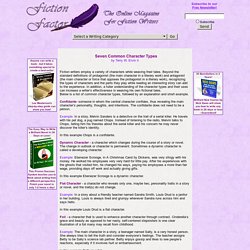
Ervin II Fiction writers employ a variety of characters while weaving their tales. Beyond the standard definitions of protagonist (the main character in a literary work) and antagonist (the main character or force that opposes the protagonist in a literary work), recognizing the types of characters and the parts they play while reading an interesting story can add to the experience. In addition, a fuller understanding of the character types and their uses can increase a writer’s effectiveness in weaving his own fictional tales. Below is a list of common character types, followed by an explanation and short example. Confidante- someone in whom the central character confides, thus revealing the main character’s personality, thoughts, and intentions.
Example: In a story, Melvin Sanders is a detective on the trail of a serial killer. In this example Chops is a confidante. In this example Ebenezer Scrooge is a dynamic character. Character Profile Templates. Thirty Question Character Survey. Creative Writing Prompts…Real Life to Characters. For many writers (like me!)
The beginning of a story is character. Something about a character intrigues me and I find myself wanting to follow them to see what makes them tick. Being a pantser (writing by the seat of my pants) as opposed to a plotter, I meet a character, write to figure out who they are, then keep writing until I discover a character’s story. Many times someone I know inspires me with a quirk or trait, or an idea emerges from a chance meeting with a stranger and my first impression of them. When someone is rude to me, I use that in my writing. Here are some creative writing exercises for you to use to discover some new characters through people you may know. Write about the head of the PTA, or Library Board. Write about a frightening or mysterious person in a neighborhood. Write about a person who makes a lot of enemies. Write about a person who has no enemies. Write about a person you admire. Write about a person you dislike/detest. Write about someone going nowhere. Characters.