
Brian Brown
32, Married, Beuatiful Daughter, High School History Teacher, Film Buff, Food Lover, Traveler
DAVID FOSTER WALLACE, IN HIS OWN WORDS. IN MEMORIAM | September 19th 2008 The world of letters has lost a giant. We have felt nourished by the mournful graspings of sites dedicated to his memory ("He was my favourite" ~ Zadie Smith), and we grieve for the books we will never see. But perhaps the best tribute is one he wrote himself ... Special to MORE INTELLIGENT LIFE This is the commencement address he gave to the graduates of Kenyon College in 2005. European History Interactive Map. Websites for Educators. 100 Terrific Sites to Find Primary Source History Documents. Researching on the Internet means working from home, viewing collections from around the world and stumbling across rare finds from somewhat obscure libraries or museums.

But it also means linking to garbage, weird conspiracy theories, and even plagiarized material. To connect you to the best historical references, we’ve generated this list of 100 terrific sites that feature primary source documents, recordings, images and more. Libraries From the Library of Congress to university research libraries, these websites are packed with authoritative information. With a bachelor’s in Information Systems, this can be an especially helpful resource. Watch Free Documentaries Online. RMC - Overview. The Gilder Lehrman Institute of American History . Home. Top 100 Speeches of the 20th Century by Rank. Memphis, Back in the Day - Photo Gallery. Slavery Images. The 1,280 images in this collection have been selected from a wide range of sources, most of them dating from the period of slavery.

This collection is envisioned as a tool and a resource that can be used by teachers, researchers, students, and the general public - in brief, anyone interested in the experiences of Africans who were enslaved and transported to the Americas and the lives of their descendants in the slave societies of the New World.
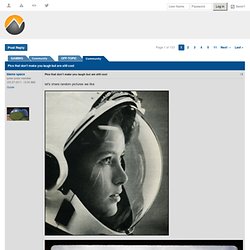
We would like to emphasize that little effort is made to interpret the images and establish the historical authenticity or accuracy of what they display. Pics that you don't make you laugh but are still cool. I hop you don't mind if I use this thread as an excuse to post some Earth porn: My current Wallpaper, The Havasu Falls The Guilin Mountains "Elephant Foot" Glacier My favorite at the moment:
From the Archive: American Cities Pre-1950. Posted Jul 22, 2010 Share This Gallery inShare19 A photographic journey through American Cities, pre-1950.
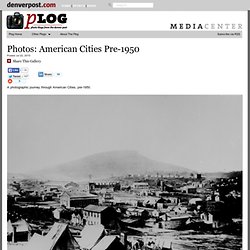
Chattanooga, Tenn. in time of war. Soldiers' tents and supply wagons beside the city building. 1864. Mathew Brady collection. Northamericaindiansof19.jpg (JPEG Image, 3508x4055 pixels) - Scaled (15%) The colorful United States between 1939-1943. This is a group of color photos that shootted since 1939 to 1943 , It is a true portrayal of American society in that age. There are some very touching photo, which shoot by the photographers whose come from the security administrational office of the farm in the U.S. operational information services. Let us walk together into the life of farms and farmers in United States during World War II. 70 Photos. Rare Color photos from Depression Era. "Pictures of the Times: A Century of Photography From The New York Times." "Pictures of the Times: A Century of Photography From The New York Times. " No single photograph can sum up the cultural climate of a decade. But the images shown here capture something of the flavor of their times, particularly in the second half of the century, with the gradual merging of high and low culture.
It was an era in which the news photograph yielded increasingly to the up-close-and-personal style that explored a subject's character beyond the necessities of mere identification and illustration. The show was assembled by Mark Bussell and Nancy Weinstock, picture editors at The Times, and Peter Galassi and Susan Kismaric, photography curators at the Modern, who spent more than a year reviewing some 1.5 million images.
Almanac of Theodore Roosevelt - Political Cartoons. Federalist Papers: Primary Documents of American History (Virtual Programs & Services, Library of Congress) ( ( ( ( FOG OF WAR ) ) ) ) Music News, Reviews, Photos, Videos, Interviews and More. Music News, Album Reviews, Concert Photos, MP3s, Videos and More. Funny Videos, Funny Pictures, Flash Games, Jokes. Headline News Summaries, World News, and Breaking News. The Washington Post: National, World & D.C. Area News and Headlines. NPR : National Public Radio : News & Analysis, World, US, Music & Arts. The Daily Beast. ESPN: The Worldwide Leader In Sports.
The New York Times - Breaking News, World News & Multimedia.
Help.