
Native American Code Of Ethics. I recently found these Native American code of ethics - I am unsure of where this originated and of it’s accuracy.
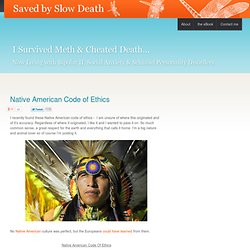
Regardless of where it originated, I like it and I wanted to pass it on. So much common sense, a great respect for the earth and everything that calls it home. I’m a big nature and animal lover so of course I’m posting it. No Native American culture was perfect, but the Europeans could have learned from them. 2012 A HOPI PROPHECY. Hiawatha The Unifier - Iroquois. Hiawatha the Unifier An Iroquois Legend Hiawatha (Haion-Hwa-Tha / He-Who-Makes-Rivers) is thought to have been a statesman, lawgiver, shaman, and unifier who lived around 1570.
According to some sources, he was born a Mohawk and sought refuge among the Onondaga when his own tribe at first rejected his teachings. His efforts to unite the Iroquois tribes were opposed by a formidable chieftain, Wathatotarho, whom he eventually defeated and who killed Hiawatha's daughter in revenge......... But this is the legend. Fort Stanwix National Monument - The Six Nations Confederacy During the American Revolution. Six Nations Indians set up camp outside of Fort Stanwix NM.
National Park Service The arrival of Europeans in their lands offered the Six Nations new opportunities of expanding their influence by becoming a dominant force in the fur trade industry. Initially their main trading partners were the Dutch; which then changed to the English after the Dutch ceded their land claims in America to England in 1660. The Confederacy's relationship with France was not amicable, as France had initially aligned themselves with the Abenaki, long time foes of the Nations.
Six Nations/French relationships see-sawed back and forth between periods of peace and violence. Celtic Twilight Otherworld - Celtic Religion Overiew. To begin with, lets first look at the sources available to us: There are quite numerous sources available, contrary to the usual belief that there is almost nothing actually there.

First, there are the archaeological sources. These are the only direct source for the prehistoric part of the religion we are talking about. The main elements we find here are sacred sites (being as well designed cult centers with a certain layout like the "Viereckschanzen" are, as there are "natural" places which were used to deposit offerings) and the findings and objects that came down on us (including as well bog bodies as graves, the objects found in ritual deposits and depictions of gods, most of which are from the time of the Roman occupation but which still tell us something about the Celtic religion) Second, there are the epigraphic sources, i.e. inscriptions.
I will now start this look at pagan Celtic Religion with a survey of what we know about what we would call "priestly" functions more or less. Meaning of some specific animals in Celtic Art. S Druidism - Envoking Spiritual Thought - Did Druids Worship Animals? Did Druids Worship Animals?
Druids as a whole do not worship animals. The worshiping of animals is called Theriolatry and is in itself a very ancient and primitive practice, but it holds no place among the erudite philosophies of the Druids. There are those, who follow the Druidic philosophy that tend more toward the Shamanistic path and do pay reverence to certain spirit guides and animal Totems. Animals, as all living creatures of earth, are revered as equals with no one animal more important than the other. However, there are some animals which stand as symbols for ones possession of supernatural gifts, powers, and/or magics. One ritual called €œTarb Feis€ requires the Druid to sleep under the skin of a freshly sacrificed bull, so the spirit of the bull can send dreams of prophecy to the sleeper. Below are listed some of the animals denoted by Celtic Shamanism and Druidism along with their spiritual denotation: Adder, Snake (Nadredd): Badger (Breach): Bat: Bear (Arth): Bee (Beach): Cock:
A Hopi Chiefs. The South Corner of Time hopi navajo papago yaqui tribal literature. One More Smile for a Hopi Clown Emory Sekaquaptewa The heart of the Hopi concept of clowning is that we are all clowns.
This was established at the very beginning when people first emerged from the lower world. In spite of the belief that this was a new world in which no corruption and immorality would be present, the people nevertheless took as their own all things that they saw in the new world. Seeing that the people still carried with them many of the ways of the corrupted underworld, the Spirit Being divided them into groups and laid out a life-pattern for each of them, so that each would follow its own life-way. Before the Hopi people left from the emergence place, one man chosen by them as their leader went up on a hill.