
Mitt Romney's Mormon faith in the spotlight - POLITICO.com - Waterfox. Mitt Romney wants voters to see him as the man to save the economy and right the country, the redeeming American hero riding in on the proverbial white horse.
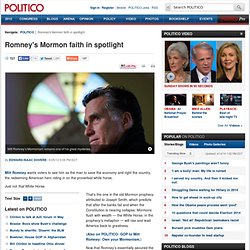
Just not that White Horse. Continue Reading That’s the one in the old Mormon prophecy attributed to Joseph Smith, which predicts that after the banks fail and when the Constitution is nearing collapse, Mormons flush with wealth — the White Horse, in the prophecy’s metaphor — will rise and lead America back to greatness. (Also on POLITICO: GOP to Mitt Romney: Own your Mormonism.) Now that Romney’s essentially secured the Republican nomination, the media attention to his religious beliefs has already kicked off a sort of national Mormonism 101. James Randi Educational Foundation. Debunking Handbook. Skeptoid. Scam School.
Quackcast. A podcast review of Quacks, Frauds and Charlatans.
Oops. Thats not right. That should be Supplements, Complementary and Alternative Medicine i.e. SCAM. Winner of the The People's Choice Podcast Awards 2009, 2010, 2011 Best Podcast, Health and Finess. Skeptic's Annotated... FFR Foundation. Merseyside Skeptics Society. Skeptics with a K Skeptics with a K is the official podcast of the Merseyside Skeptics Society.
Each episode features Mike, Marsh and Alice chatting about stuff that interests them, often with a skeptical angle. Skeptically Speaking. Skeptic Zone. Atheist Experience. Bad Science.