
Carbon to Nitrogen Ratio - Composting 101. All organic matter is made up of substantial amounts of carbon (C) combined with lesser amounts of nitrogen (N).
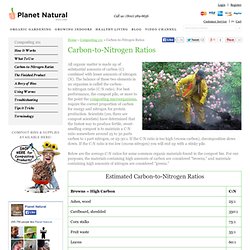
The balance of these two elements in an organism is called the carbon-to-nitrogen ratio (C:N ratio). For best performance, the compost pile, or more to the point the composting microorganisms, require the correct proportion of carbon for energy and nitrogen for protein production. Scientists (yes, there are compost scientists) have determined that the fastest way to produce fertile, sweet-smelling compost is to maintain a C:N ratio somewhere around 25 to 30 parts carbon to 1 part nitrogen, or 25-30:1. Worm farming - Environment - Rhodes University.
How to start a worm farm. Vermicomposting - Composting with Worms. Vermicomposting: Composting with Worms by Soni Cochran, Extension Associate NOTE: The following information is for the home vermicomposting enthusiast.
This resource is not intended to be a reference for commercial bins or bins located in businesses, schools, and/or government agencies. Many gardeners compost both yard waste and kitchen waste with compost piles, sheet composting or some other method during the growing season.