
How the Brain Stops Time. One of the strangest side-effects of intense fear is time dilation, the apparent slowing-down of time. It's a common trope in movies and TV shows, like the memorable scene from The Matrix in which time slows down so dramatically that bullets fired at the hero seem to move at a walking pace. In real life, our perceptions aren't keyed up quite that dramatically, but survivors of life-and-death situations often report that things seem to take longer to happen, objects fall more slowly, and they're capable of complex thoughts in what would normally be the blink of an eye.
Now a research team from Israel reports that not only does time slow down, but that it slows down more for some than for others. How the Brain Stops Time. Turning Thoughts into Words. Brain-computer interfaces could someday provide a lifeline to “locked-in” patients, who are unable to talk or move but are aware and awake.
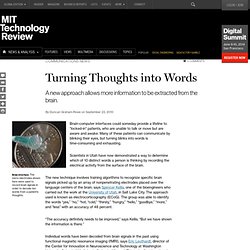
Many of these patients can communicate by blinking their eyes, but turning blinks into words is time-consuming and exhausting. Scientists in Utah have now demonstrated a way to determine which of 10 distinct words a person is thinking by recording the electrical activity from the surface of the brain. Etymology of Neuroscience Terms. Your Brain in Love. Men and women can now thank a dozen brain regions for their romantic fervor.

Researchers have revealed the fonts of desire by comparing functional MRI studies of people who indicated they were experiencing passionate love, maternal love or unconditional love. Together, the regions release neurotransmitters and other chemicals in the brain and blood that prompt greater euphoric sensations such as attraction and pleasure. Conversely, psychiatrists might someday help individuals who become dangerously depressed after a heartbreak by adjusting those chemicals.