
Lady Landfill Skyscraper. Honorable Mention 2011 Skyscraper Competition Milorad Vidojević, Jelena Pucarević, Milica Pihler Serbia The Great Pacific Garbage Patch is a pile of plastic floating in the northern part of the Pacific Ocean.

The San Francisco Chronicle claims that the patch now weights more than 3.5 million tons, 80% of which is plastic waste that reaches more than thirty meters in depth. This area of the Pacific Ocean is a relatively calm region that causes the accumulation of floating garbage in big piles. Its removal will cost billions of dollars and no country claims responsibility. This proposal consists of a series of underwaterscrapers, floating islands that will be used to remove and recycle the garbage patch.
Considering that the size of the floating garbage island is constantly varying, the structural organization of the skyscraper should reflect these variations. Artificial icebergs could turn ocean garbage patch into energy. The Great Pacific Garbage Patch is a silent yet powerful reminder that human wastefulness is killing our planet.

Swirling midway between California and Hawaii, this vortex of ocean pollution has been growing bigger every year, while the discarded plastic that comprises it slowly breaks down into microscopic death pills for fish and birds. Looking at a picture of the Great Pacific Garbage Patch gives one the urge to fashion a huge pool skimmer, hire a boat, and lift all that trash right out of the ocean. Apparently it's not that easy, and even if you could skim it all out, there's no way to keep another patch from forming.
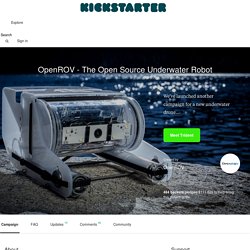
That's why a team of Serbian architects devices a series of underwater skyscrapers that could be placed in the gyre, ready to collect all the trash and convert it into energy. From the water's surface, the Lady Landfill Skyscraper looks like a funky moss-covered iceberg. OpenROV - The Open Source Underwater Robot by OpenROV. Collections Categories On Our Radar Start a projectStart Sign in Explore About Help Hello More from Kickstarter.
Turning Sea Trash into Boat Fuel. Plastics News Mobile. CHINO, CALIF. (March 2, 1:35 p.m. ET) — Production-run pellets made partially from plastic ocean litter have become a reality, thanks to 18 months of cooperation between packaging brand designer Method and recycler Envision Plastics Industries LLC. The first batch of pellets streamed off the production line at Envision’s Chino plant around noon March 1. Executives from both companies beamed with pride and excitement, and captured the technology breakthrough, snapping pictures and video. They then watched as the otherwise unassuming black pellets were loaded into 1,200-pound boxes, ready to be molded into a Method-designed container that will hit a major grocery chain this fall.
“We did a couple of fist pumps,” smiled Adam Lowry, co-founder, and chief greenskeeper of the San Francisco-based Method, whose packages are made from 100 percent recycled materials. Method-brand products include household and personal-care items. The two companies overcame obstacles to reach this point. Plastic-Eating Underwater Drone Could Swallow the Great Pacific Garbage Patch.
A new underwater drone concept could seek and destroy one of the ocean's most insidious enemies, while earning a profit for plastics recyclers.

This marine drone can siphon plastic garbage, swallowing bits of trash in a gaping maw rivaling that of a whale shark. Industrial design student Elie Ahovi, who previously brought us the Orbit clothes washer concept, now presents the Marine Drone, an autonomous electric vehicle that tows a plastic-trapping net. The net is surrounded by a circular buoy to balance the weight of the garbage it collects. It discourages fish and other creatures from entering its jaws via an annoying sonic transmitter, and it communicates with other drones and with its base station using sonar.
The system could stay underwater for two weeks, sipping tiny plastic shards and entire plastic bottles. Ahovi, Adrien Lefebvre and fellow students developed several schematics, including a concept that looks much like a whale shark. [via Infoniac] Marine Drone. Hightech-Drohne jagt Plastikmüll im Meer. Experten zweifeln: Kleinstteilchen sind Sorgenkinder Müll-Drohne: Schickes Design, doch gegen Kleinstmüll chancenlos (Bild: Ahovi) Mit ultramodernen Fangnetzen wollen ehrgeizige Umweltschützer den Unmengen an Plastikabfällen im Meer zu Leibe rücken.

Experten zweifeln allerdings an der Machbarkeit. Nicht die großen, treibenden Müllmengen verursachen die größten Sorgen, sondern die Kleinstteilchen, die von Tieren als Nahrung aufgenommen werden und damit in die Nahrungskette gelangen, halten Forscher dagegen. Marine Roboter auf Abfalljagd Das Drohnen-Konzept Veolia ist vom Industrie-Designer Elie Ahovi an der French International School of Design ins Leben gerufen worden.
Umweltexperten wie die Greenpeace-Meeresbiologin Antje Helms zweifeln an der Machbarkeit dieses Vorhabens. Flaschen vom anderen Ozeanende Vermeidung einzige Lösung Das Problem des Plastikmüllstrudels im Pazifik - und auch anderswo - kann mit solchen Methoden aber nicht gelöst werden, meint Helms.