
Orange customers flee to Free Mobile’s new ultra-cheap plans — Mobile Technology News. By 2020, independent workers will be the majority. Freelancers, consultants and other independent workers account for 16 million people in the country now and will become a majority by 2020, predicts Gene Zaino, the president and CEO of MBO Partners, which connects independent worker with employers.

The company, which recently conducted a survey of independent workers, said that based on existing trends, there is expected to be 65 to 70 million independent workers in the next decade, comprising more than half of all employees. He said this new era is forcing employees, employers and the government to confront a new reality as solo workers become the norm. “These individuals — whether crowd-sourced or providing tactical solutions or finding their first project on a marketplace or providing strategic advice to client — these are the pioneers of the next era,” Zaino said at GigaOM’s Net:Work conference. Many independents are not average workers at least in their own eyes. Photo by Pinar Ozger. Do we need defined hours of work any more? The Freelance Surge Is the Industrial Revolution of Our Time - Sara Horowitz - Business.
Welcome to the Gig Life.
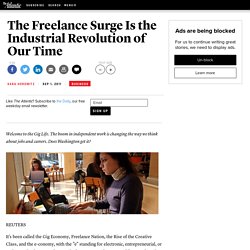
The boom in independent work is changing the way we think about jobs and careers. Does Washington get it? It's been called the Gig Economy, Freelance Nation, the Rise of the Creative Class, and the e-conomy, with the "e" standing for electronic, entrepreneurial, or perhaps eclectic. Everywhere we look, we can see the U.S. workforce undergoing a massive change. No longer do we work at the same company for 25 years, waiting for the gold watch, expecting the benefits and security that come with full-time employment.