
Pineal gland. The pineal gland, also known as the pineal body, conarium or epiphysis cerebri, is a small endocrine gland in the vertebrate brain.
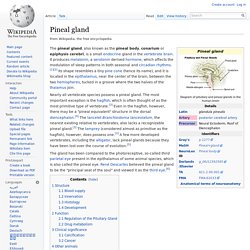
It produces melatonin, a serotonin derived hormone, which affects the modulation of sleep patterns in both seasonal and circadian rhythms.[1][2] Its shape resembles a tiny pine cone (hence its name), and it is located in the epithalamus, near the center of the brain, between the two hemispheres, tucked in a groove where the two halves of the thalamus join. Nearly all vertebrate species possess a pineal gland. The gland has been compared to the photoreceptive, so-called third parietal eye present in the epithalamus of some animal species, which is also called the pineal eye.
René Descartes believed the pineal gland to be the "principal seat of the soul" and viewed it as the third eye.[6] Structure[edit] Blood supply[edit] Innervation[edit] The pineal gland receives a sympathetic innervation from the superior cervical ganglion. Histology[edit] Development[edit] Descartes and the Pineal Gland. First published Mon Apr 25, 2005; substantive revision Wed Sep 18, 2013 The pineal gland is a tiny organ in the center of the brain that played an important role in Descartes' philosophy.
He regarded it as the principal seat of the soul and the place in which all our thoughts are formed. In this entry, we discuss Descartes' views concerning the pineal gland. We also put them into a historical context by describing the main theories about the functions of the pineal gland that were proposed before and after his time. 1. The pineal gland or pineal body is a small gland in the middle of the head. 1.1 Antiquity The first description of the pineal gland and the first speculations about its functions are to be found in the voluminous writings of Galen (ca. 130-ca. 210 CE), the Greek medical doctor and philosopher who spent the greatest part of his life in Rome and whose system dominated medical thinking until the seventeenth century. 1.2 Late Antiquity 1.3 Middle Ages 1.4 Renaissance.
Fluoride & the Pineal Gland. A Fluoride-Free Pineal Gland is More Important than Ever. (NaturalNews) There has been some controversy over the activity of adding synthetic fluoride to municipal water supplies and elsewhere, but not enough.
The seriousness of this issue is more than what most realize. Fluoridation ranks with GMO's and tainted, forced vaccinations among the great crimes against humanity. Understanding the Different Fluorides There are two types of fluoride. Calcium Fluoride, which appears naturally in underground water supplies, is relatively benign. On the other hand, the type of fluorides added to water supplies and other beverages and foods are waste products of the nuclear, aluminum, and now mostly the phosphate (fertilizer) industries. For this article, the term Sodium Fluoride will include all three types. Health Hazards of Sodium Fluoride Generally, most fluoride entering the body is not easily eliminated. This consequence of dental fluorosis, which seriously harms teeth, from daily fluoridation has been documented. How Did We Get Stuck With Stuff? Best ways to Decalcify Pineal Gland and Active.